Panama Marlin Fishing
Packages
Fishing Info
Seasons
Available Species
Accomodations
FAQ’s
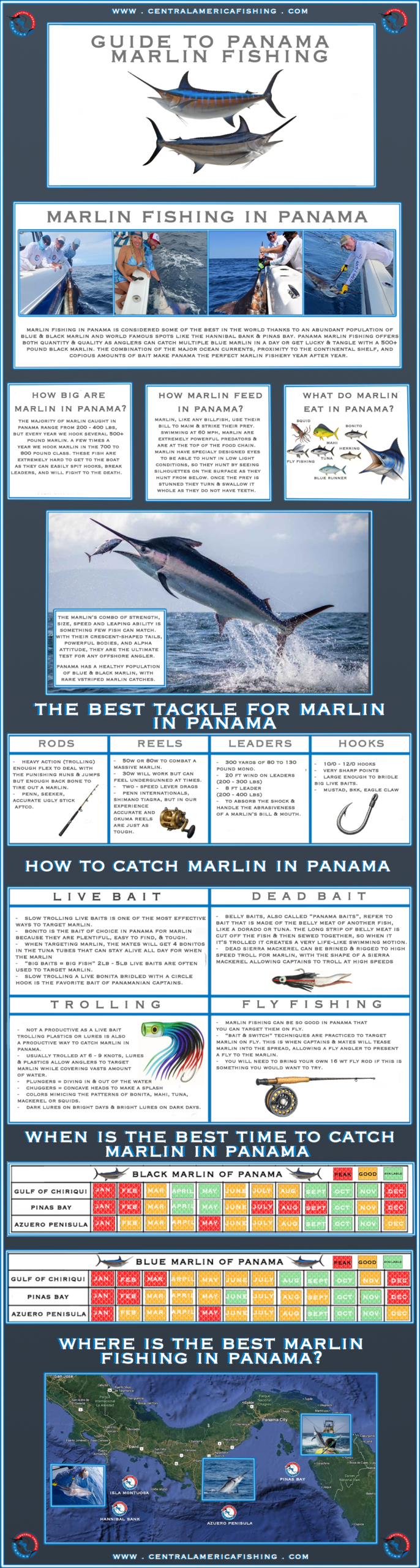
Marlin fishing in Panama is considered some of the best in the world thanks to an abundant population of blue and black marlin and world-famous hot spots like the Hannibal Bank and Piñas Bay. Panama marlin fishing offers both quantity and quality as anglers can catch multiple blue marlins in a day or get lucky and tangle with a 500+ lb black marlin. The combination of major ocean currents, proximity to the continental shelf, and copious amounts of bait make Panama the perfect marlin fishery year after year. Taken from our 20 yrs of experience fishing for marlin in Panama, our Panama marlin fishing guide will cover:
- How to catch marlin in Panama
- Best tackle for marlin fishing in Panama
- The top baits & fishing methods to catch marlin
- The best months to fish for marlin in Panama
- The best locations to catch marlin in Panama
- Recommended fishing lodges & fishing charters
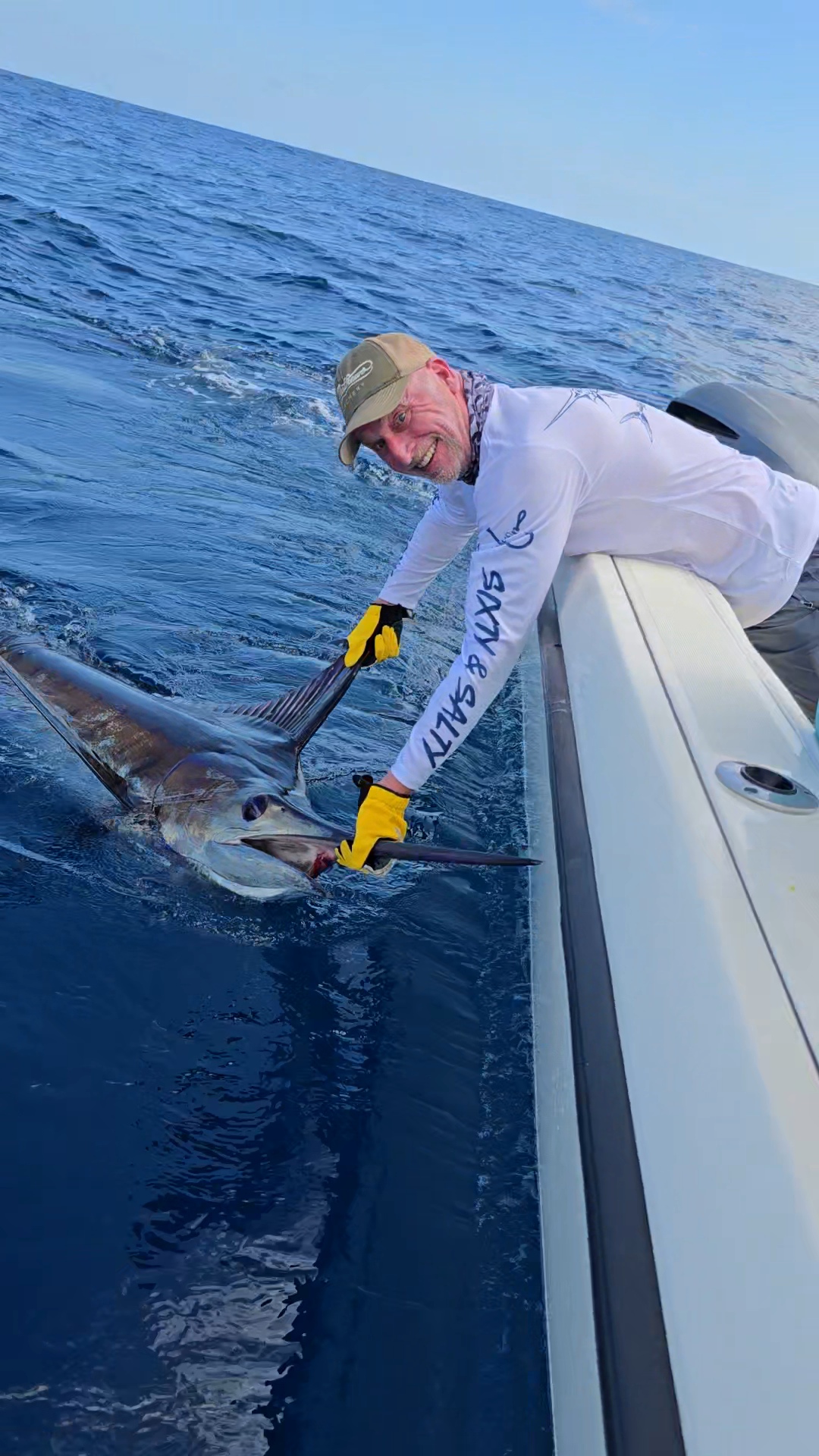
The Expert Local Guide to Marlin Fishing in Panama
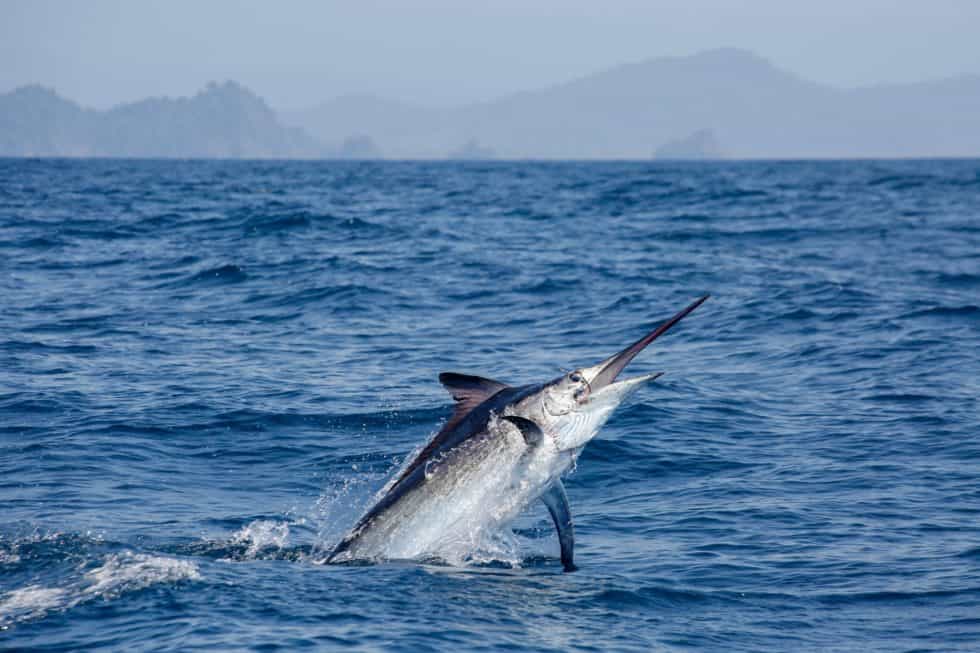
We’ve been fishing for marlin in Panama for 20 years, and hearing the reel scream on a marlin bite never gets old. Their combination of size, strength, and their incredible acrobatic jumps when hooked is something that few fish can match. With their crescent shaped tails, powerful bodies, and alpha attitude, they are the ultimate test for any offshore angler. Panama is home to countless species of prized game fish, but marlin remain at the top of saltwater anglers’ bucket lists year after year.
How Big are Marlin in Panama?
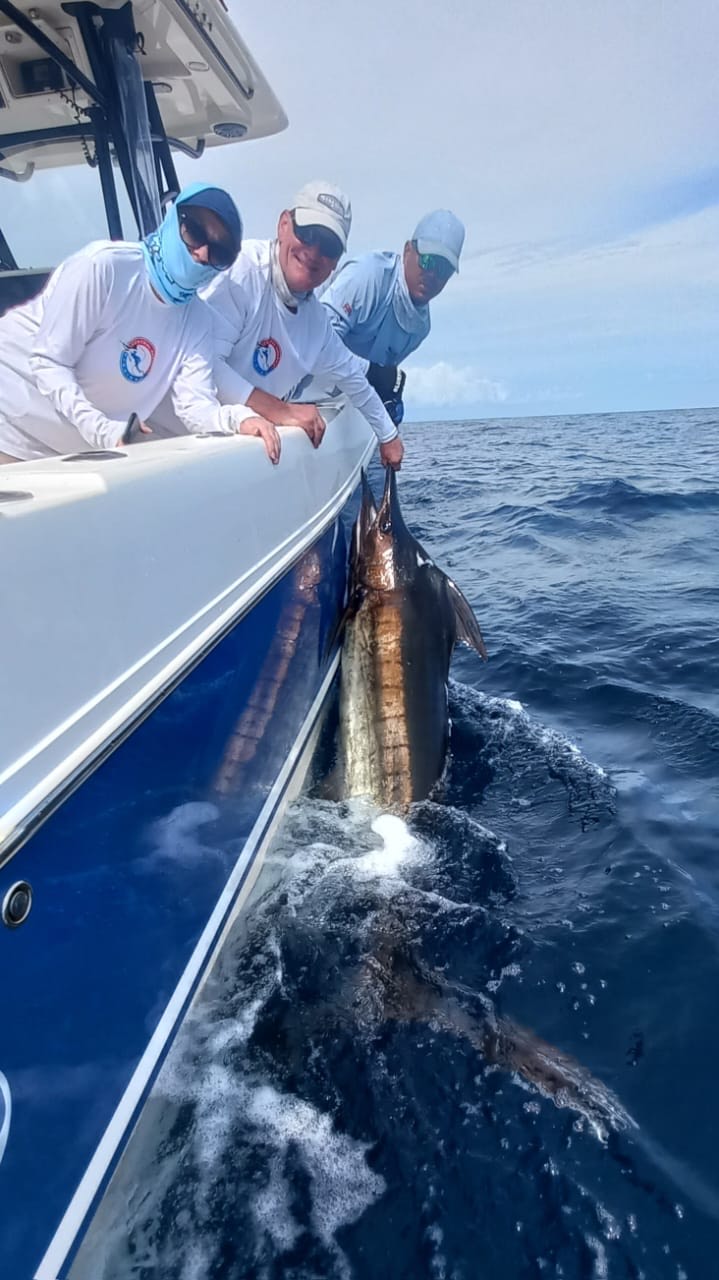
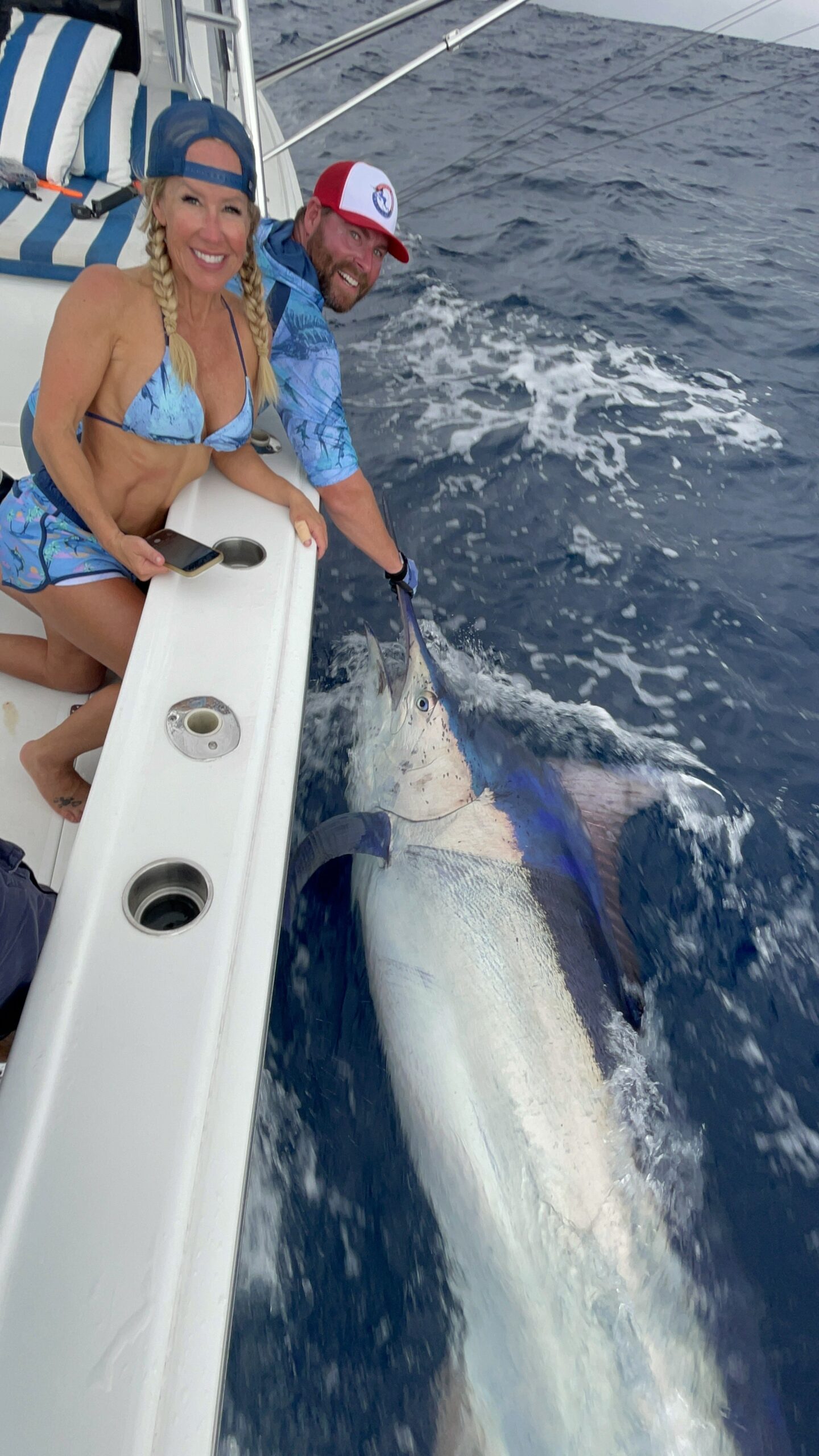
The majority of marlin caught in Panama are typically in the 250-400 lb range, but every year we hook into several fish that weigh 500 lbs or more. A few times a year we see giants that our captains estimate to be 700-800 lbs, but they are extremely hard to bring to the boat without straightening, breaking, or spitting the hook or snapping the leader. Big marlin like that can literally fight themselves to death, so trying not to drag out the fight too long is extremely important. We don’t see many granders here, marlin that weigh over 1,000 lbs, but no doubt they patrol these same waters we fish in.
How Marlin Feed
Marlin, like any billfish, use their bill to maim and stun their prey. Being able to swim at speeds up to 60 mph, marlin are extremely powerful predators and sit near the top of the food chain. Marlin have large, specially designed eyes that allow them to hunt for food in the low light conditions, so they hunt be seeing silhouettes on the surface as they swim below. Once they stun or wound their prey, they turn and swallow the fish whole as they do not have teeth to rip and shred like sharks.
What Do Marlin Eat?
The most common items on the marlin’s menu are squid, herring, flying fish, sardines, dorado, mackerel, bonito and small to medium sized yellowfin tuna. As one of the apex predators in the open ocean, marlin can eat just about anything they want. We’ve even seen pods of dolphin fleeing when marlin are around, so many of our captains believe that marlin can hunt juvenile dolphin or small porpoises.
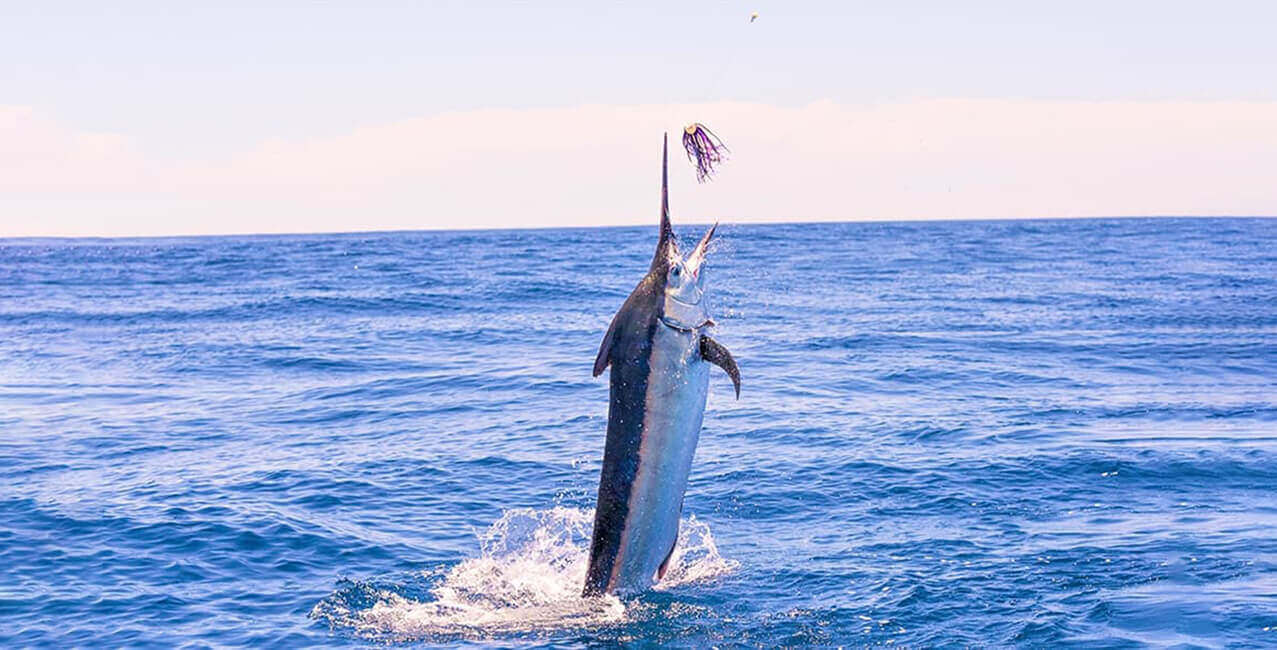
How to Catch Marlin in Panama
Being in the right spot at the right time is the first step to planning a successful marlin trip. Catching a marlin isn’t an easy feat to accomplish anywhere in the world, but your odds increase when you fish in Panama thanks to a robust population of blue and black marlin, an overwhelming supply of bait, and strict catch-and-release policies for decades. With defined peak fishing and weather seasons, multiple marlin hot spots, and some historic fishing lodges in Panama, it’s as good a place as any to catch the ultimate saltwater trophy fish.
Of course, having the right tackle to be able to hook and land these fish is half the battle. All of our Panama fishing lodges and charter operations have been personally vetted by the CAF staff, so we know them all first-hand and can vouch for their quality and skill. All or our Panama fishing charters will be stocked with 50W and 80W conventional tackle, appropriate leader and terminal tackle, tuna tubes to keep bait alive, and a selection of plastic trolling lures.
There are several different ways to catch marlin. Each method has its own application and strengths and weaknesses depending on sea conditions, the presence of (or lack of) live bait, and even the weather. Some days live bait can be irresistible, other days trolling plastic lures is the most effective way to find marlin. It’s also quite common to try several different methods in the same day until we figure out what works.
The Best Tackle for Marlin Fishing in Panama
If you travel all the way to Panama to catch a trophy marlin, you need to be prepared with the correct fishing tackle. Too weak of a rod or line could lead to a longer fight, and the longer the fight goes the higher chance you have of losing the fish due to snapped lines, pulled hooks, or even broken rods. Not only that, the longer the fight goes on, the more detrimental it is to the fish’s health and chance of survival after release. If you don’t have the right line & leader, it’s entirely possible that your leader will snap or get cut off as they begin to thrash with their ragged bills in an effort to dislodge the hook. When you come marlin fishing in Panama, any trip with one marlin released is considered a success. We enjoy weeks with multiple marlin bites each and every day, but other weeks you may work hard and cover a lot of water and only get one shot at it, so don’t let faulty tackle be the reason why you lost the fish of a lifetime.
Rods
Marlin in Panama average 250-400 lbs, so you need a rod with enough muscle to tire them out. A heavy action trolling rod is ideal as it’ll have enough flex to deal with the punishing runs and acrobatic jumps you are going to encounter, but enough strength to help you win the battle. Some of the best marlin rods used on our boats are Seeker, Ugly Stick, and Penn.
Reels
If you are specifically targeting marlin, as opposed to just trolling around hoping for any pelagic, you’ll want to be set up with a 50W or 80W class tackle. A 30W reel can also work, but if you hook into a large marlin you may feel under gunned. High-end reels will have two-speed lever drags, which gives you both the low-end power to turn its head or bring it up from the depths as well as speed retrieves when you need to put line back on the reel in a hurry. The classic reels on most of our boats are Penn Internationals and Shimano Tiagra, but in our experience the Okuma Makaira reels are just as tough and are super smooth.
Line & Leader
Reels should be full several hundred yards of 80-130 lb mono. That mono is typically attached to a 20 ft wind on leader between 200-300 lbs which helps absorb shock and gives the mates something to grab onto as they try to bring the fish boatside. Last but not least, the rig is typically finished off by an 8 ft leader of heavier 200-400 lb leader so it’s tough enough to handle the abrasiveness of the marlin bills.
Hooks
Since these are big fish, and have the potential to be huge, we typically use 10/0 to 12/0 hooks. These hooks are also large enough to bridle live bonito, which can be as big as 4-5 lbs.
The Different Ways We Fish for Marlin in Panama
Live Bait
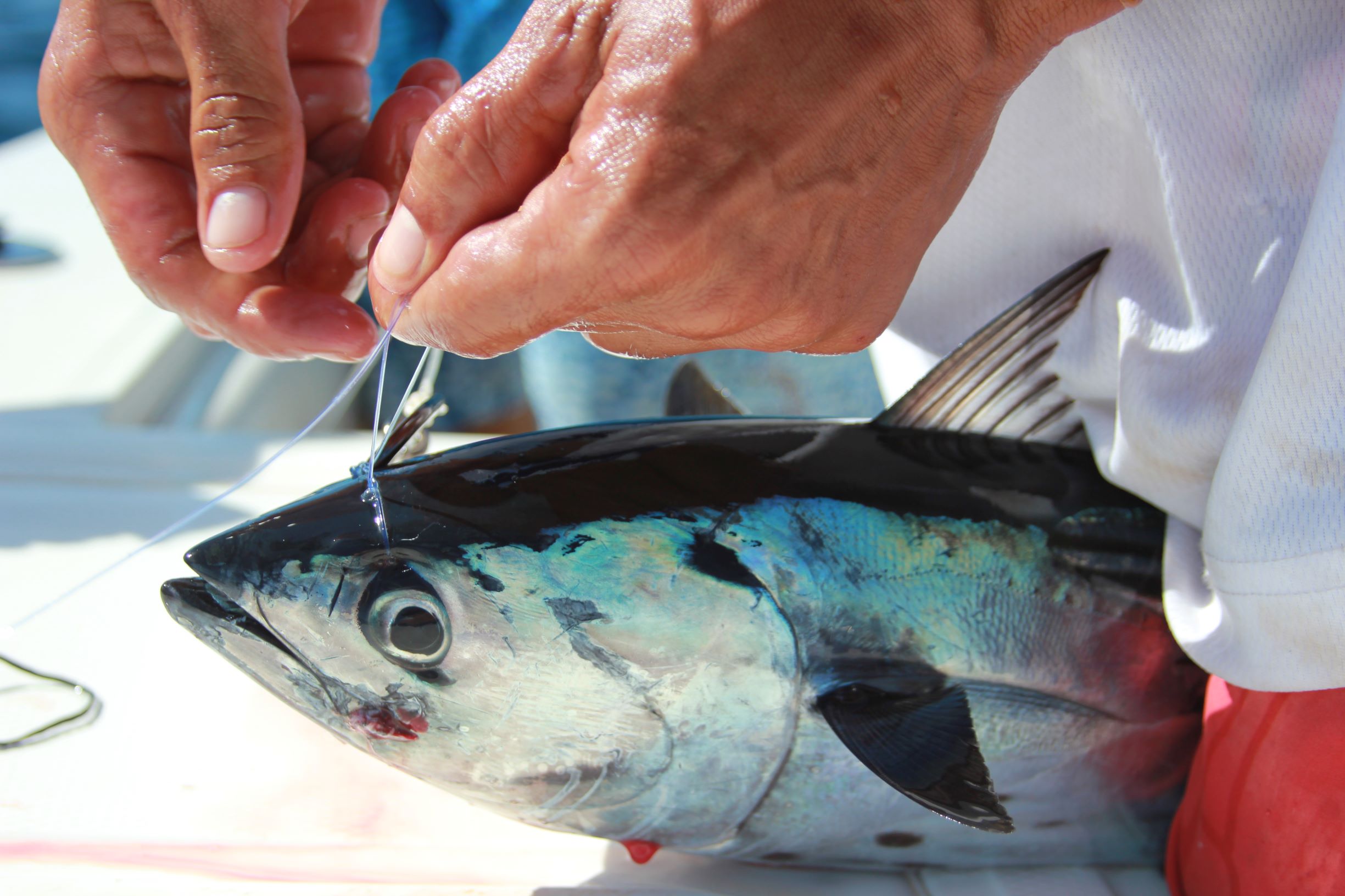
One of the most effective methods for catching marlin is slow trolling live bait. The bait of choice across Panama is bonito. A subspecies of tuna, bonito are plentiful, easy to find, and they are tough. A fishing day is off to a good start when you see bonitos feeding on the surface as it’s usually a good indicator of the presence of bait and other marine life. Bonito can be caught with sabiki rigs, speed trolling with downriggers, trolling rapalas, or even casting small 20g-40g surface irons into a feeding school. Once caught, bonito are usually placed upside down in specially designed ‘tuna tubes’, which can keep them alive for hours thanks to constant water being pumped over them. Generally speaking, 2 lb – 5 lb fish make the best marlin bait, but as we love to say, “big bait, big fish”, so large bonito can be rigged up on heavier 50W or 80W tackle.
When it’s time to fish, bridling the bonito with a circle hook and then slow trolling is the first choice for any captain trying to catch a marlin in Panama. Typically, no more than two baits are put out at a time as they tangle the lines as they frantically try to avoid predators. We don’t cover a lot of ground with this technique, so trolling live bait is usually more of a dialed-in approach when we know the marlin are around. Once the live bonito die, they are kept as they can be used for chunk bait for yellowfin tuna, cubera snapper, and other bottom fish, so they are an incredibly useful bait.
In a pinch, blue runners (cojinua) can also be used to catch marlin. One of the most diverse live baits in Panama, blue runners can be trolled for anything from roosterfish inshore to tuna, mahi, and sailfish offshore. While generally small for marlin, we often get surprised when a marlin takes one in the middle of a school of tuna. They are also the ideal pitch bait in case you see a marlin sunning itself at the surface or swimming by the boat.
Dead Bait
The sailfish hotspots of Costa Rica and Guatemala spend most days trolling a spread of ballyhoo and plastic teasers. While the main target of these spreads is sailfish, plenty of marlin are caught this way as well. Catching an angry marlin on 30# class tackle isn’t what a lot of captains want to do because it can lead to longer fight times or lost fish, so often times boats will have a 50# reel rigged up with a frozen bonito or mackerel to use as a pitch bait in case there is time when you see it crash your spread.
In Panama in particular, mates love to make “belly bait” from dorado. Using the unwanted stomach section of a previously caught fish, the filet will be tied together for strength and shape, then it will be trolled behind the boat. The tapered shape of the belly bait gives it a natural swimming motion, so I’ve seen several sailfish and marlin be caught because they couldn’t resist the temptation of what looked like an easy mahi meal.
Plastics / Trolling Lures
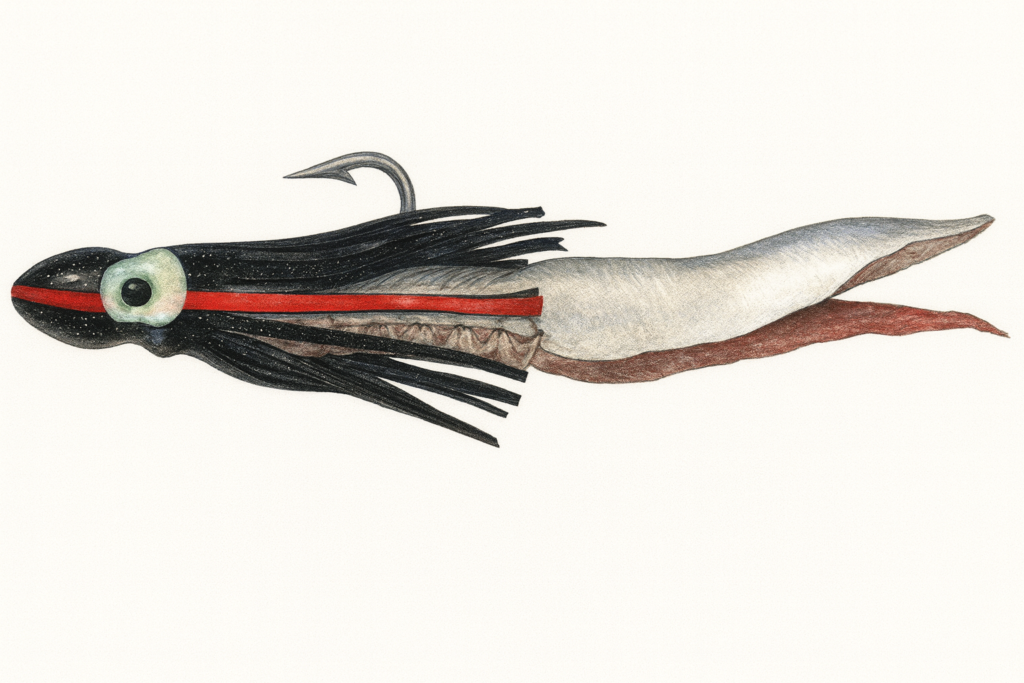
While usually not as productive as live bait, trolling lures is also a productive way to catch marlin in Panama. This is most often done in when trying to cover large areas in search of marlin, whereas slow trolling live bait is often done in specific spots like the Hannibal Bank. Lures are trolled faster than live bait, usually 6-9 knots, so you cover more territory this way versus slow trolling live baits which is done at 3-5 knots so you don’t drag and kill the bait. The most common marlin trolling lures are plastic squids. These can be plungers, designed to dive in and out of the water, or chuggers, which are concave heads to create more splash like a popper. Most quality charter boats will have a variety of colors to match the typical marlin prey like tuna, mahi, mackerel, bonito, and squids. Having a variety of colors is also useful because as the conditions change, you can change your bait. Many captains prefer to use darker lures on bright days and brighter colored lures on overcast days.
Fly Fishing
The marlin fishing in Panama can be so good that we can fly fish for them as well. To do this it requires a ‘bait and switch’ technique, so you’ll need to first tease the marlin up behind the boat, then work in tandem with a skilled mate to have him remove the plastic teaser as the same time you are presenting your fly to the marlin. You’ll need to bring your own 16 wt fly rod to try that here!
Where is the Best Marlin Fishing in Panama?
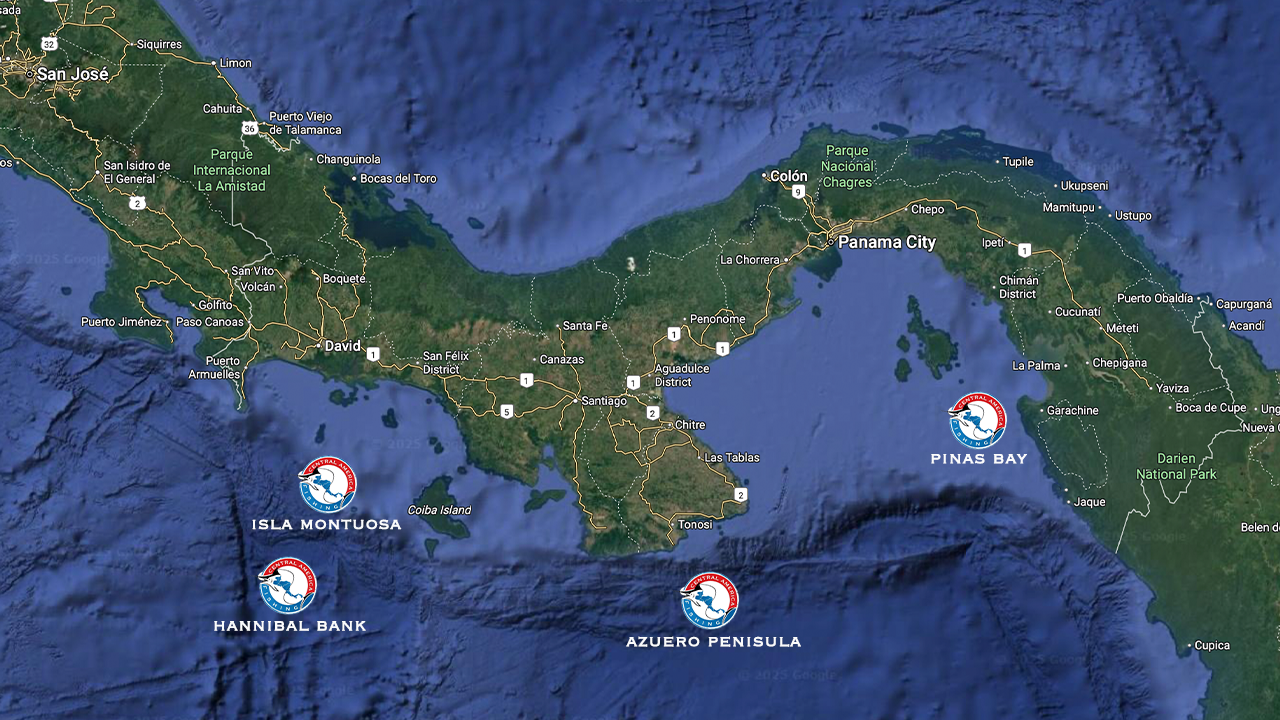
The best marlin fishing in Panama is done on the Pacific Coast. It’s so good that two of the most famous marlin fishing destinations in the entire world are found in Panama: the Hannibal Bank and the Zane Grey Reef. These two destinations, and the lodges that service them, go head-to-head every year for the title of ‘the best marlin fishing in Panama‘. While the rest of Central America runs from north to south, Panama is unique in that it is oriented west to east. This leads to the inevitable discussion if the fishing is better in the Gulf of Chiriqui in the west or Piñas Bay in the far east. The reality is that every marlin season is slightly different based on currents and bait, but thanks to the proximity to the continental shelf and strong offshore currents, the conditions are perfect to keep marlin coming back year after year. Below we break down the top marlin fisheries in Panama.
Marlin Fishing at the Hannibal Bank
The Hannibal Bank is located in Western Panama at the southern end of the Gulf of Chiriqui, roughly 50 miles from the mainland. This natural underwater formation was found in 1914 by the USS Hannibal when it was doing survey work for the Panama Canal. When combined with the ever-present Equatorial Currents, the continental shelf creates an upwelling of cooler, nutrient rich water which in turn kicks off the start of the food chain. At the Hannibal Bank, the ocean floor rises from several thousand feet to just a couple hundred feet deep – in some spots the peaks reach within just 150 ft of the surface. In addition to serving as a cleaning station for large predatory fish, the currents that pass over and through the peaks of the Hannibal Bank attract baitfish, which in turn bring in large pelagics like marlin, sailfish, tuna, and dorado.
The Gulf of Chiriqui is roughly a 2,500 sq mile fishery, but starting your day looking for marlin around the Hannibal Bank is a bet that pays off more often than not. When the currents are right and bait is present, marlin can line up around the bank like trout facing upstream
How to Get There:
In order to fish the Hannibal Bank, you will fly into Panama City (PTY) where most people spend the first night. The next day you will take a 50-minute domestic flight from Panama City to the second biggest city in Panama, David. It is also possible to fly into PTY and the connect right to David on Copa Airlines, which allows you to skip Panama City. Once you land in David, depending on where your fishing lodge or beach hotel is located, it is about a 1-1.5 hour drive. From any of the fishing lodges in the Gulf of Chiriqui, the Hannibal Bank will be 50-52 miles offshore.
Marlin Fishing at Montuosa Island
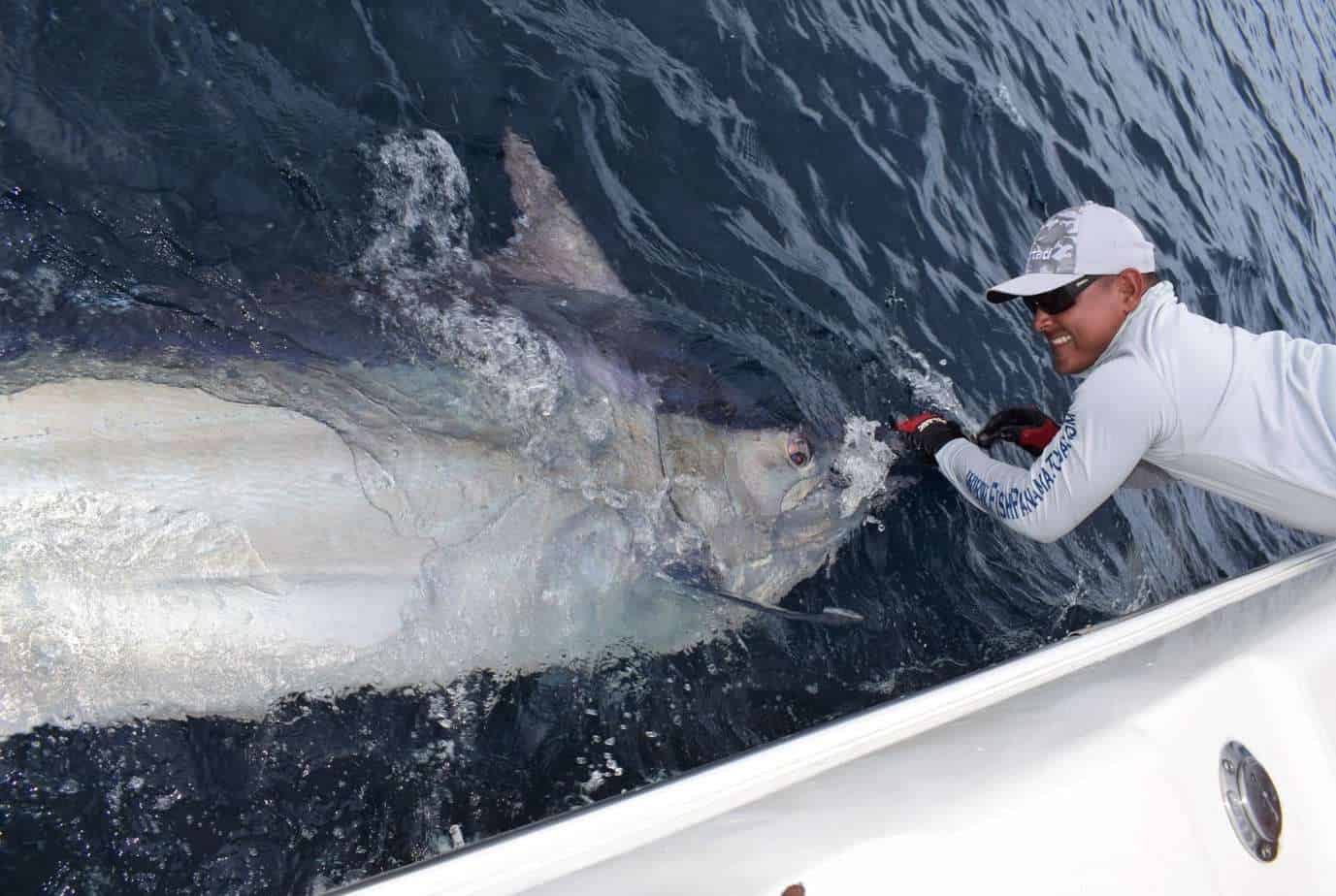
Sitting just 13 miles west of the Hannibal Bank is the mighty Montuosa Island. ‘Isla Montuosa’, as it’s called in Spanish, aptly means “mountainous island” because as soon as you lay eyes on the bright green trees rising up out of the middle of the sea it becomes obvious where the name comes from. Sitting right on the continental shelf, Isla Montuosa often serves as the only visual landmark you’ll have during your day of marling fishing. This is the farthest island from Panama’s Pacific Coastline as it sits 50-55 miles from most of the fishing lodges. Many captains will troll the top of the continental shelf around Isla Montuosa in search of blue and black marlin, all the way keeping an eye out for birds & feeding tuna. The back side, or south side, of the island is a secondary place to target marlin as there are several pinnacles. This puts you about 60 miles offshore, so the marlin caught here are typically big fish.
How to Get There:
The logistics to fish at Isla Montuosa are exactly the same as the Hannibal Bank. From any of the fishing lodges in the Gulf of Chiriqui, Isla Montuosa will be about 55 miles offshore. It’s also farther west in the Gulf of Chiriqui than the Hannibal Bank, so sometimes you can stop by Isla Ladrones and try your luck for a black marlin that may be patrolling the reefs in search of an easy meal.
Marlin Fishing in the Azuero Peninsula
When anglers think of the Azuero Peninsula, yellowfin tuna and roosterfish come to mind, not marlin. In fact, this stretch of coastline has earned the nickname “the Tuna Coast” thanks to its prolific tuna fishery. That said, all the huge marlin off the coast of Peru, Colombia, and in Panama’s own Piñas Bay can’t make it over to the Hannibal Bank or Costa Rica without passing by the Azuero Peninsula en route. The southern most part of Panama, here the coastline extends so far south the offshore fishing grounds are often just 5 to 7 miles away most days.
The local fishery here specializes in tuna and inshore fishing, so you won’t find any big sport fishers with cabins or even large center consoles, rather the ubiquitous boat on the Azuero Peninsula is the super panga. While it’s perhaps not the first-choice for a multi-day, hardcore marlin expedition, plenty of marlin have been caught here without the captains putting in countless days trolling for them. Catching a marlin in the Azuero Peninsula should be looked at as part of your trip, but not the sole focus of it. What make marlin fishing here fun is that you can catch them while live baiting reefs for amberjacks or cubera snapper, so when a black marlin explodes on the surface it raises the heartbeats of everyone on the boat real quickly!
How to Get There:
You can reach the Azuero Peninsula by car or by plane. From Panama City, the drive is about 5-6 hours, with the majority of it on the main 4-lain highway. To cut down on travel time, you can also catch a domestic flight from Panama City to Chitre, then drive 1.5 hrs to your destination. The main fishing towns here are Pesadi and Cambutal, and both offer small fishing lodges, boutique hotels, and skilled local captains.
Marlin Fishing at the Tropic Star Lodge
The fishing lodge that put Panama on the map as far back as the 1930s is none other than the famous Tropic Star Lodge. Located in the remote Piñas Bay (Bahia Piñas), Tropic Star is found about 150 miles southeast of Panama City in the heart of the great Darien Jungle that borders Colombia. More than anything else, what makes Piñas Bay and the Tropic Star Lodge one of the world’s most famous marlin fisheries is the Zane Gray Reef. This underwater pinnacle was documented by the legendary Guy Harvey decades ago and is one of the best places in the world to target black and blue marlin.
Located literally just a few miles from the docks of the famous Tropic Star Lodge, this reef can reach just 120 ft deep at its shallowest part. With the cold Humboldt current from South America and the warmer currents coming down from Central America, the waters around Piñas Bay are often teeming with marine life. Just twenty miles out you’ll reach the continental shelf where incredible numbers of blue marlin and Pacific sailfish can be found. Made famous decades ago with over 300 IGFA World Records, it’s not a lodge that is resting on its laurels. In February 2025 the lodge set a new all-time record with 51 marlins released in one day.
How to Get There
Anglers headed to the Tropic Star Lodge will need to overnight in Panama City no matter where they are flying from. After overnighting in the capital city, early the next day you’ll take an hour-long private charter flight directly to Piñas Bay. The lodge will take you just a few minutes from the airstrip and get you oriented and settled in.
Summary Table of the Best Marlin Fishing Destinations in Panama
| Destination | Distance from Panama City | Distance to Marlin Fishing | Best Months | Average Cost |
|
Gulf of Chiriqui (Hannibal Bank)
|
1 hr flight to David + 1 hr drive to lodge or hotel | 50 miles to Hannibal Bank | December to March, June to August | $4,000-$7,000 per person |
|
Piñas Bay (Tropic Star Lodge) |
1 hr private charter to Piñas Bay + 10 min boat ride | Less than 10 miles to Zane Gray Reef | December to February for black marlin. June-Aug for blue marlin | $8,000-$11,000 per person in peak black marlin season. $6,000-$8,000 pp rest of year |
| Azuero Peninsula | 45 min flight to Chitre + 1.5 hr drive. Or a 6 hr drive. | Less than 5 miles to the continental shelf | January and May | $3,500-$4,500 per person |
| Bay of Panama/Panama City | 1 hr – 1.5 hr drive to various marinas | 50 miles to the Pearl Islands | December to Feb, June & July | $2,000-$5,000 per person |
Panama offers the opportunity to catch marlin 12 months a year, but knowing where to go and when increases your chances. Each of the top destinations presents a different set of pros & cons, conditions, and logistics, but we’ll help guide you to the best marlin fishing vacation possible.
When is the Best Marlin Fishing in Panama?
Panama offers some of the best year-round marlin fishing in the world, but the Hannibal Bank and Piñas Bay produce phenomenal blue and black marlin fishing from December through March. There is also a good “second season” from June to August most years, especially for black marlin. Along the Pacific Coast, the dry season (summer) runs from December to April while the green season runs from May to November, and those weather patterns have a major influence on the marlin activity. It should be noted that we do actually catch them 12 months a year, but based on our 20 yrs of experience fishing here, the table below shows the most productive marlin months in Panama.
| Peak Season (Dec to Feb) | Slower Months (Mar-May) | Second Season (June-Aug) | Off Season (Sept to Nov) | |
| Gulf of Chiriqui | Dry season weather and blue water returns. Baitfish gather over the Hannibal Bank and other high points. Both blue and black marlin are found in numbers, usually around 200-450 lbs. | The hottest and driest months of the year are March and April. As the water temp increases, the marlin bite slows down but the sailfish bite is at it’s peak in March and April. | The peak tuna season rages from March to July, and the mahi numbers increase, so the marlin have plenty of prey to bring them back to the area. July and August are secretly a great time to target black marlin. | These are the three rainiest months in western Panama and the slowest fishing. Seas can be rough, water can be green, and a lack of baitfish can make fishing very, very challenging. |
| Piñas Bay / Tropic Star | This peak marlin season is the busiest time of year to fish Piñas Bay. Tropic Star Lodge requires 7-night bookings in these months. Lodge record 51 marlin in a day was set in Feb 2025. | Warmer water temps tend to see the marlin off. A few stragglers are always available, especially in March. April & May mark the transition between dry season and rainy season, | Black marlin are notorious for being caught on shallow reefs, so with the rains bringing back bait and current lines, this produces a great ‘second season’ for big blacks in Piñas Bay. | September can still offer great marlin action some days. In October and November, things at Tropic Star Lodge slow down for maintenance before the next peak season begins. |
| Azuero Peninsula | The dry season weather returns to the peninsula. The upwellings bring baitfish and with marlin all around the Tropic Star Lodge in the east and Hannibal Bank in the west, marlin pass by close to shore and can be caught in super pangas. | March & April are the hottest and driest months of the year in the Azuero. When the rains return in May, that can bring marlin back around with the currents and trash lines. | While not peak marlin season, inshore anglers (even kayak anglers) can be surprised when a black marlin takes the live bait that was intended for a cubera snapper or amberjack. | These three months mark the peak of the rainy season in the Azuero Peninsula. With most boats being pangas in this region, the fishing is often very wet and very slow. |
The Peak Marlin Season (December to February)
The months of December, January, and February are historically the best months of the year to catch marlin in Panama. These three months are what we consider to be our “peak marlin season” as it’s when we see the biggest concentration of marlin here. These months also coincide with the start of our dry season, so the warm, sunny weather helps usher in the clear blue water and when nutrient upwellings around Hannibal Bank concentrate large baitfish schools. The best months of the year to target mahi-mahi (dorado) are November and December, so it’s no coincidence that the marlin are right on their tails. A good day on the Hannibal Bank can generate 3-4 marlin bites a day, with some fish topping 500 lbs.
With the combination of the North American winter, Panama’s dry season (summer), and the peak marlin action, during the months of January and February the Tropic Star Lodge actually requires a week-long minimum with six full days of fishing. We see both black and blue marlin during these months, but striped marlins are rare. Tropic Star Lodge broke their record for marlin released in one day in February 2025 with 51 released in a single day by the entire fleet.
The Second Marlin Season (June to August)
Once the green season, or rainy season, has established itself in May, the fishing changes. In Panama, the months of April-May-June are considered to be the peak season for yellowfin tuna, so the big marlin aren’t too far behind them. We’ll still catch blue marlin these months, but we also see a lot of black marlins as well. Black marlin in particular are notorious for looking for meals along shallow reefs, so don’t be surprised if a big black takes your live bait as you target cubera snappers or amberjacks. In the worst case scenario that you can’t find any marlin on a trip during these months, having yellowfin tuna as a fallback plan is never a bad idea!
Marlin Fishing and the Moon Phases
While it’s far from an exact science, many of us in the industry try to avoid fishing on and just after a full moon when targeting marlin and sailfish. The theory is that they can hunt at night using the light of the moon, so they may be less active when we are out there during the daylight hours. Full moons also mean bigger tides, which can make the fish less active.
Monthly Blue & Black Marlin Fishing Calendars for Panama
The detailed, month-by-month fishing calendars below are for blue marlin and black marlin. Each calendar shows the historical monthly trends at the top marlin destinations in Panama.


Panama Marlin Fishing Packages
The sample itineraries below will give you an idea of the kinds of marlin fishing packages we organize, but please contact us to customize your dream Panama marlin fishing vacation. Once you speak to us, we’ll help you sort through the various options based on your budget, interest and who you are traveling with. Soon you’ll see why nearly 40% of our anglers are repeat or referral guests!
Fishing the Hannibal Bank
Panama Fishing Paradise
The Best of Panama
Fishing Highlights of Panama
Affordable Panama Fishing
Popper Addicts
Tropic Star Lodge
Panama Mothership
Panama Private Island Lodge
Available Offshore Species in Panama
Blue Marlin
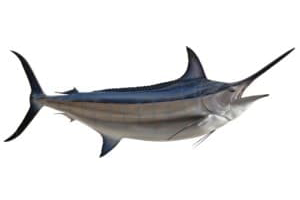
Black Marlin
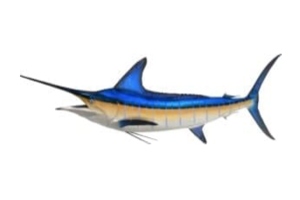
Striped Marlin
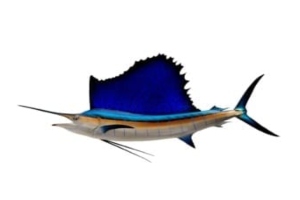
Sailfish
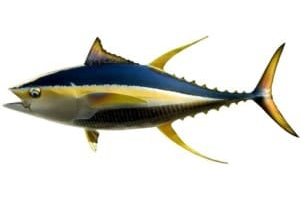
Yellowfin Tuna
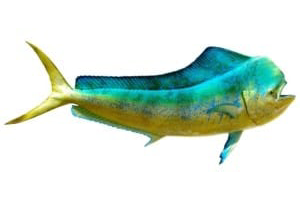
Dorado
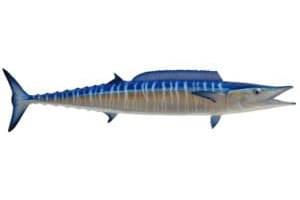
Wahoo
Panama Fishing Lodges & Accommodations
Hardcore offshore anglers have been fishing for marlin Panama for decades, so fortunately there are plenty of options for accommodations to fit almost any travel style and budget. It all started with the world-famous Tropic Star Lodge, which put marlin fishing in Panama on the map. Located in eastern Panama in the now-famous Piñas Bay, it was built in 1961 by a wealthy Texas oil man, Ray Smith, and opened to the public in 1963. Over the past 50 years, over 300 world records have been set in the waters around Piñas Bay. Today the lodge is under new ownership and has undergone massive renovations and improvements, so today Tropic Star Lodge is equally famous as it is luxurious. Anglers who visit enjoy air-conditioned rooms, ocean views, two pools, great food, and of course their famous rainbow fleet of Bertram boats that have caught more marlin than any other lodge in Panama.
In Western Panama you’ll find the Gulf of Chiriqui, which is home to famous marlin hotspots like the Hannibal Bank and Montuosa Island. The majority of the fishing lodges in Panama are located here in western Panama, so we can have you stay on the mainland at our top 5-star lodge, a luxury lodge on a private island, or even a 70′ mothership that spends all week offshore at Coiba Island. If you don’t have the budget for one of the luxury all-inclusive lodges, we also have the option to have you stay in a boutique 4-star hotel and then have our charter boats pick you up at the hotel dock each morning.
In the Azuero Peninsula, you can stay at a small, exclusive fishing lodge or any of our boutique luxury hotels. With most of the boats in this region being center consoles and super panga, this is the most affordable marlin fishing in Panama.
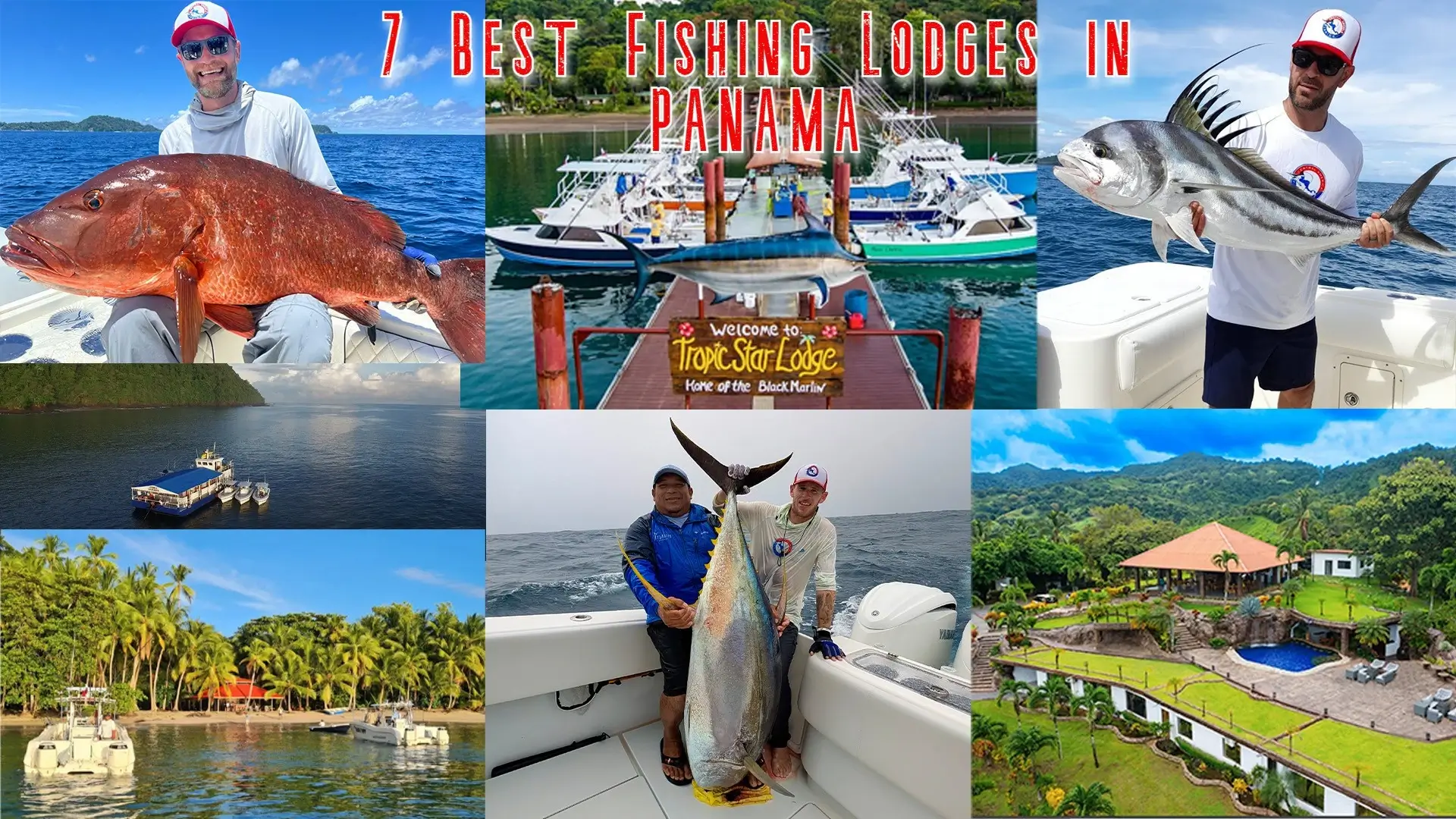
You can see a full list of our 7 Best Fishing Lodges in Panama.
Panama Day Tours & Non-Fishing Activities
Our marlin fishing packages don’t need to be all fishing, all the time. First of all, you don’t need to dedicate your entire week to marlin fishing, we can certainly mix in a few light tackle inshore days to target roosterfish and cubera snapper.
Before you head out to the Pacific Coast, we can arrange a few nights in Panama City to experience the culture and history in the capital city. Whether it’s an off day from fishing or for the non-anglers in your group, there are several great eco, adventure, and cultural tours available in Panama. The list includes:
- Canopy zip-line tour
- White Water Rafting
- ATVs
- Horseback Riding
- Surfing
- Golf
- Guided tours of national parks
- Waterfalls
- Island Hopping Tour
- Snorkeling
- Kayaking
- Coffee plantation tour
- Bird Watching
- Cultural & Historical Tour of Panama City
- Panama Canal Tours
- Panama Canal Fishing for Peacock Bass & Snook
How to Plan Your Marlin Fishing Vacation to Panama
Central America Fishing makes planning your Costa Rica tarpon vacation easy and stress free thanks to our 20 years of local expertise and by offering the best direct pricing. Get started planning your customed tarpon vacation in these easy steps:
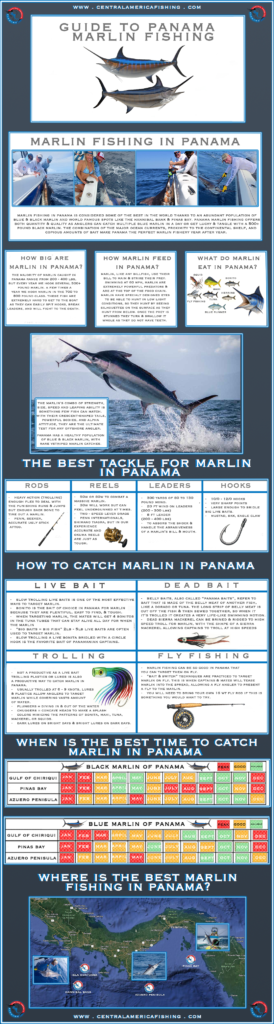
- Download our FREE Panama Marlin fishing guide:
- Review our full Panama fishing calendar to review the best time of year to catch marlin and any other species that interest you.
- Contact us to start planning your customized Panama marlin fishing trip. You can spend hours researching when to visit, where to stay, and who to fish with – but an email or a short phone call with us can save you all that time. More importantly, we make sure you are in the right spot, at the right time, and fishing with the best captains available.There are no booking fees and we always charge the same rates as the hotels, fishing lodges and fishing boats, so you get the same direct pricing using our expertise as you would trying to learn and manage all this on your own. With our decades of experience in the industry, we have contacts and operators that you’d never find online on your own. Whether it’s a hardcore fishing trip, a family vacation, or a honeymoon, we’ll hand pick the perfect accommodations and fishing boat to make sure that your vacation with us is one of the best you’ve ever had. We can also combine marlin fishing in Panama with the great inshore fishing in Panama and/or even a day of fishing on the Panama Canal itself for peacock bass.
Call us anytime at 855-414-3474 or submit a web inquiry and we’ll get back to you within 24 hrs to start planning your dream fishing vacation.
- Check out a few of our client testimonials from previous Central America Fishing guests that have caught marlin in Panama:
“Hi Chris – We had a fabulous trip, being met at the gate and guided through immigration and customs was so stress free especially after an eleven-hour flight, you forget your name never mind what country you are in!
The Sofitel Legend in Panama was one of the best we have stayed at, excellent service, stunning view of the city and a very comfortable hotel, quiet sophistication at its best. The canal tour was excellent and a big bucket list ticket for us.
What can I say about Paradise Fishing Lodge from being picked up by Louis at David airport and his infectious enthusiasm for everything!! To hugging goodbye to our newfound friends at the end of our stay was everything we could have wished for. Fishing was great and I enjoyed my days out on the boat, I am sure you followed the Instagram posts from the lodge, but the final tally was:
2 X Marlin 200lb and 250lb
Mahi Mahi 51lb
2 x Tuna 60lb and 80lb
Rainbow Runner
Nurse Shark
6 x Jack
Red Snapper
King Fish
4 Tuna
Cubera Snapper 30lb
White Tipped Shark
Thanks again for helping us put together this trip and I am sure we will be in touch again for future trips to Central America. Best regards”
“Hey Chris, The trip was great. Your team did a great job, and everything was very smooth. The Paradise Fishing Lodge and Luis were great. I’m so glad we booked the boat with the Seakeeper…. It made all the difference for the three members of our family who get seasick. They could actually stay out all day.
The trip itinerary was excellent…, clear, and helpful. I am so happy that I didn’t have to guess what to tip people. I never felt lost or worried when we got off the plane. Your people were always there.
The lodge had great people, great charter captains and boat, and were super flexible.
The Sofitel Legend and old Panama City are great. You felt safe, unlike Mexico. Kids went shopping by themselves…something we would never allow in Mexico or even Costa Rica. We had a good tour guide and it was fun to see the Panama Canal. that’s a must-do.
Overall, the trip was great, and we would use your service again. The wife said she would come back (that’s big). We have fished and hunted worldwide; this was one of the better trips.”
“Hi Chris! AMAZING doesn’t even begin to describe our vacation to Panama to celebrate my husband’s 60th birthday! Everything from stepping off the plane and being greeted, expedited through immigration, & completely feeling like VIP’s, made the whole trip worry free and easy-peasy.
The fishing was extraordinary, and my husband was able to check off a few bucket list species. Fish for the 3 days included a 400-pound Black Marlin, which put up a 55-minute battle to the boat, a 180+ Yellow Fin tuna that took more than 2 hours to land. I only lasted 6 minutes with it and was in way over my head and had to turn it over to my husband. Add to the list, a nice Rooster Fish, a Blue Jack, a Blue Runner, a Needle fish, three 25+ Red Snapper, two smaller Snapper, a Nurse Shark and two White Tip Sharks. Everything was released except the tuna, and 1 Red Snapper, which we split with the Captain/Mate and took some to the resort for the chef to expertly prepare a few meals for us.
Isla Palenque was wonderful. The Casitas on the beach were just beautiful and very nicely appointed. The staff was extremely attentive, gracious and VERY patient with us as we do not speak Spanish. The food was very good also.
We can’t thank you enough for making this one of our most memorable trips. I have been singing praises for Central American Fishing the whole time and hopefully sending many referrals your way. We definitely want to plan another trip to Costa Rica (we’ve already been twice) and you will be the first person we reach out to when planning starts!
Thanks again!”
What Our Guests Love
About Panama Marlin Fishing
Panama is one of the world’s most famous marlin fisheries, so anglers from all over the world are excited to visit this big game fishing mecca. While catching a marlin is far from a guarantee, putting lines in the water at some of the most famous marlin grounds always raises your heart beat.
The marlin numbers in Panama may not be as high as the totals that we see in Costa Rica and even Guatemala, but what Panama may lack in quantity it more than makes up for in quality. Marlin in Panama tend to be bigger than other destinations, with fish averaging 300-500 lbs, but it’s not uncommon to see 600+ lb marlin.
Due to its geographic location, Panama is too far south for hurricanes and rarely is disturbed by Pacific storms. Even though we may be fishing 50-60 miles offshore, the sea conditions on the Pacific are calm and flat the majority of the year. With a set dry season (summer) and green season (winter/rainy season), it’s relatively easy to plan a marlin fishing trip around great weather and good sea conditions.
In Panama you won’t see giant marinas full of boats like you now do along Costa Rica’s Pacific Coast or in a place like Cabo. Instead, you have a handful of secluded, high-end all-inclusive fishing lodges spread out along Panama’s Pacific Coast. When you are out marlin fishing, most days it’s rare to see another boat that isn’t from the same lodge you are staying at.
What We Love
About Panama Marlin Fishing
We love the unknown… When you come marlin fish in Panama, you may run 50 miles offshore and have the bad luck of never finding a hungry marlin. On the flip side, you could have the best fishing day of your life and catch multiple marlin and new personal bests in terms of size. When you get your first marlin bite, you also don’t know if it’s an average sized fish of 300 lbs or a giant that can push upwards of 700-800 lbs. There are never guarantees with marlin fishing, but out here truly anything is possible.
Many of our guests come to Panama laser-focused on catching a marlin, and that’s fine, but we love that Panama is far from a one-trick pony. It’s true that Panama offers some of the best marlin fishing in the world, but no fishery is red hot for 365 days a year. If the marlin bite simply isn’t happening for you, you can easily pivot to target mahi or look for surface boils of yellowfin tuna. On the run back in for the day, you can also stop to do inshore and bottom fishing for upwards of 10-20 different species.
Unlike Costa Rica and Guatemala, whose fleets contain 30′-50′ sport fishers, the vast majority of the boats in Panama are center consoles. While they don’t offer the shade or even AC like some of those bigger boats do, the CCs offer a more hands-on and intimate experience with your fish as you are up close and personal with them.
Panama Marlin Fishing FAQs
When is the best time to catch marlin in Panama?
The best time of year to catch marlin in Panama is December through mid-March. The peak marlin season coincides with our dry season, or summer, weather. The months of June through August are also very productive, especially for black marlin.
How much does it cost to marlin fish in Panama?
The cost varies depending on the number of people in your group and how many days you fish. A visit to the famous Tropic Star Lodge in peak marlin will be more than $10,000 per person, but it includes six days of fishing and all-inclusive accommodations. Our most affordable packages in the Gulf of Chiriqui or the Azuero Peninsula can be as little as $3,000-$4,000 per person.
What do you do with the marlin you catch in Panama?
By law, all billfish in Panama are strictly catch and release. Unlike places like Cabo or the USA, 100% of the marlin in Panama are catch and release.
While not a law, we also strongly encourage releasing all roosterfish, tarpon, and cubera snapper as they are such prized inshore species. Other species like tuna, dorado (mahi), wahoo, snappers, groupers, corvina, snook can be kept and enjoyed for a fresh seafood dinner.
How many marlin can I expect to catch in Panama?
Any day you catch and release a single marlin is considered a success, even if that means it’s the only fish you catch that day. If you are fishing with a group of 4 anglers, it probably isn’t realistic to expect to catch four marlins in one day, although it most certainly does happen. Every week is different, some weeks our anglers don’t get a single bite, other weeks they get multiple bites per day. If you fish for 3-4 days on your Panama fishing trip, chances are high that you will at least encounter a marlin.
For perspective, the new daily record set at the famous Tropic Star Lodge just happened in February 2025 as a father/son duo released 10 marlins in a day. One of the best fishing reports from Central America Fishing customers was from 2021 when our clients went 9 for 11 on marlin over three days. Also in February 2025 we had customers catch three black marlin on their final fishing day.
What is the standard tip for a fishing charter in Panama?
A standard tip for a charter fishing crew in Panama is 10%-20% of the cost of the charter. If you stay at an all inclusive fishing lodge in Panama you may not know how much the boats cost per day as you probably were given a package price, but in general $150 per day would be the lower end while $200-$300 per day would be towards the higher end.
What is the world record marlin size?
The all-tackle record for black marlin was set in Cabo Blanco, Peru back in 1953 at 1,560 lbs. The all-tackle record for blue marlin is 1,376 lbs, caught off of Hawaii back in 1992.
What if there is bad weather on our fishing day?
This is a question we hear a lot and typically requires a two part answer:
If the captain, lodge, or government deem the conditions are unsafe the trip will be cancelled. The first course of action is to try and reschedule you, but if that is not possible you will be refunded in full.
However, rain and dark clouds are not considered bad weather. We are in the tropics and rain is a common occurrence here so that is not a cause for cancelling the trip. Many great fishing days happen in the rain, especially for tuna – as they say the fish are wet anyway! If you don’t want to fish in the rain there will be no refund.
Every single Panama Fishing Vacation booked with Central America Fishing includes the following:
- Free Vacation Planning (no fees + direct rates)
- VIP Airport Meet & Greet upon arrival into PTY
- Private, air-conditioned transfers with English speaking driver.
- Domestic flights (as needed)
- Luxury accommodations hand-picked and customized for your group. Choose between private condos & villas, luxury beach resorts, exclusive boutique hotels, and all inclusive fishing lodges.
- 100% private fishing charters on all our Panama Fishing Packages
- All eco / adventure tours you’d like to include
- All Panama taxes
- Free quotes on travel insurance
- Pre-arrival assistance with dinner reservations, tee times, pre-stocking your condo or villa, hiring a private chef, and special requests.
- 24/7 support once you are here in country
What if there is bad weather on our fishing day?
This is a question we hear a lot and typically requires a two part answer:
If the captain, lodge, or government deem the conditions are unsafe the trip will be cancelled. The first course of action is to try and reschedule you, but if that is not possible you will be refunded in full.
However, rain and dark clouds are not considered bad weather. We are in the tropics and rain is a common occurrence here so that is not a cause for cancelling the trip. Many great fishing days happen in the rain, especially for tuna – as they say the fish are wet anyway! If you don’t want to fish in the rain there will be no refund.
Every single Panama Fishing Vacation booked with Central America Fishing includes the following:
- Free Vacation Planning (no fees + direct rates)
- VIP Airport Meet & Greet upon arrival into PTY
- Private, air-conditioned transfers with English speaking driver.
- Domestic flights (as needed)
- Luxury accommodations hand-picked and customized for your group. Choose between private condos & villas, luxury beach resorts, exclusive boutique hotels, and all inclusive fishing lodges.
- 100% private fishing charters on all our Panama Fishing Packages
- All eco / adventure tours you’d like to include
- All Panama taxes
- Free quotes on travel insurance
- Pre-arrival assistance with dinner reservations, tee times, pre-stocking your condo or villa, hiring a private chef, and special requests.
- 24/7 support once you are here in country
How many people will be on my fishing boat?
All fishing charters booked by Central America Fishing are private, so the boat is 100% yours. We do not set up any shared charters.
Do I need a fishing license to fish for marlin in Panama?
Surprisingly, the answer is no. Despite being one of the world’s premier sport fishing destinations for a couple decades now, Panama does not require a fishing license.
Why Fish With CAF?
We have been fishing, living, and traveling around Central America since 2003. Plan your trip with local experts to make sure you are in the right place, at the right time, and on the right boat. We’ll help you fish for what you want, the way you want.
Free vacation planning + the best direct rates. No booking fees, no upcharges!
Nearly 40% of our anglers are repeat & referral guests. CAF puts you on the fish!
Curated vacation pacakges. We hand-pick your accommodations & fishing captains for the best vacation experience.
Personalized service. From pre-arrival special requests to our amazing 24/7 in-country support.
We are proud to have a global reach and have hosted anglers from 17 different countries here in Central America!
About the Author
I first visited Costa Rica during a semester abroad in 2003 and instantly fell in love with the language, culture, and natural beauty. I caught my first roosterfish on that trip, and ever since then I knew that I wanted to live here. After graduating in 2004, I worked for a year in the corporate world, but I was unhappy and unstimulated, so I returned to live in Costa Rica full time in 2005. Today I can proudly say that I’ve been in Costa Rica for half of my life, I met my wife here, and my two boys were born here so they are “Ticos”.
I’ve been working in the sport fishing industry in Central America for twenty years, I’ve had articles published in fishing magazines, hosted fishing TV shows, fished in several tournaments, and I’m a four-time IGFA trophy club member. I am however most proud to say that 40% of our anglers are repeat and referral guests. I’ve personally visited every destination, hotel, and fishing lodge that we partner with so that your next vacation with us is one of the best you’ve ever had.
Chris Atkins - Angler & Owner of Central America Fishing
All fishing vacations booked with Central America Fishing include the following:
- Free Vacation Planning (no fees + direct rates)
- VIP Airport Meet & Greet upon arrival into SJO
- Private, air-conditioned transfers with English speaking driver.
- Luxury, private accommodations hand-picked and customized for your group. Choose between private condos & villas, luxury beach resorts, exclusive boutique hotels, and fishing lodges.
- Private fishing charters
- All eco / adventure tours you’d like to include
- All Costa Rican taxes
- Free quotes on travel insurance
- Pre-arrival assistance with dinner reservations, tee times, pre-stocking your condo or villa, hiring a private chef, and special requests.
- 24/7 support once you are here in country
Most Popular Fishing Packages
 – COSTA RICA –
Los Suenos Fishing
Costa Rica Tarpon Fishing
Costa Rica Fly Fishing
 – PANAMA –
Panama Sport Fishing
Panama Tuna Fishing
Panama Fishing Lodges
 – BELIZE –
Belize Fly Fishing
Belize Permit Fishing
Belize Tarpon Fishing
 – GUATEMALA –