
Roosterfish
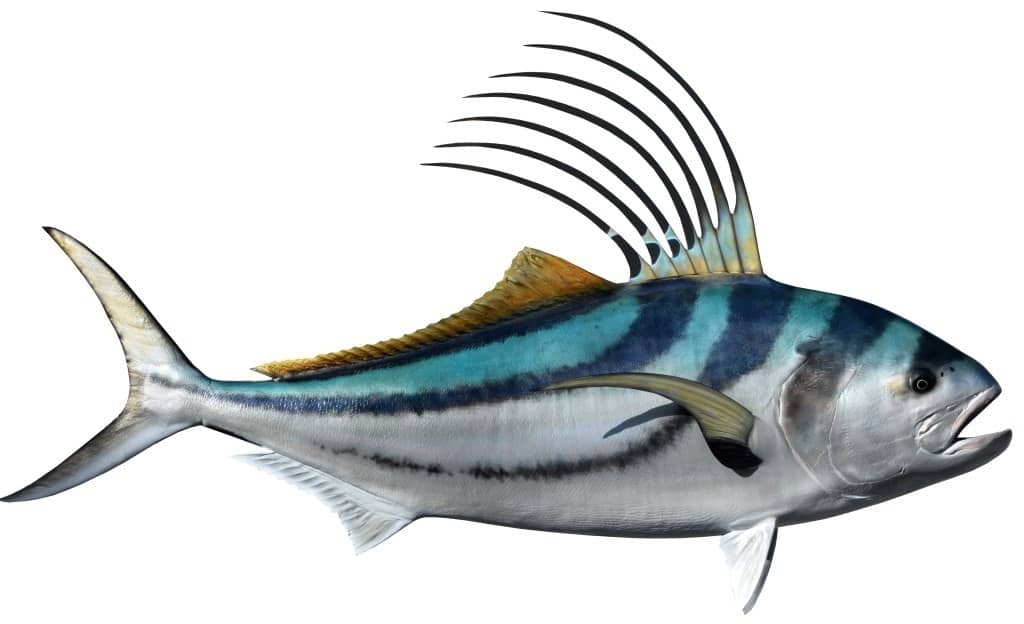
Roosterfish as they are one of the most sought-after inshore game fish in the world, so anglers from across the globe visit Central America in hopes of catching one. Roosterfish are aggressive, possess incredible fighting power, and make for beautiful pictures if you are lucky enough to catch one. The best way to catch a roosterfish is using live bait, but they can also be taken on swim baits, jigs, and of course everyone’s dream – a popper or topwater plug. Roosters are known to patrol rocky coastlines and islands, but can also be found just behind the surf on sandy bottoms. Roosterfish are strictly catch and release in Central America. Our guide to catching roosterfish will tell you how, when and where to catch this trophy inshore species.
The Ultimate Guide to Catching Roosterfish
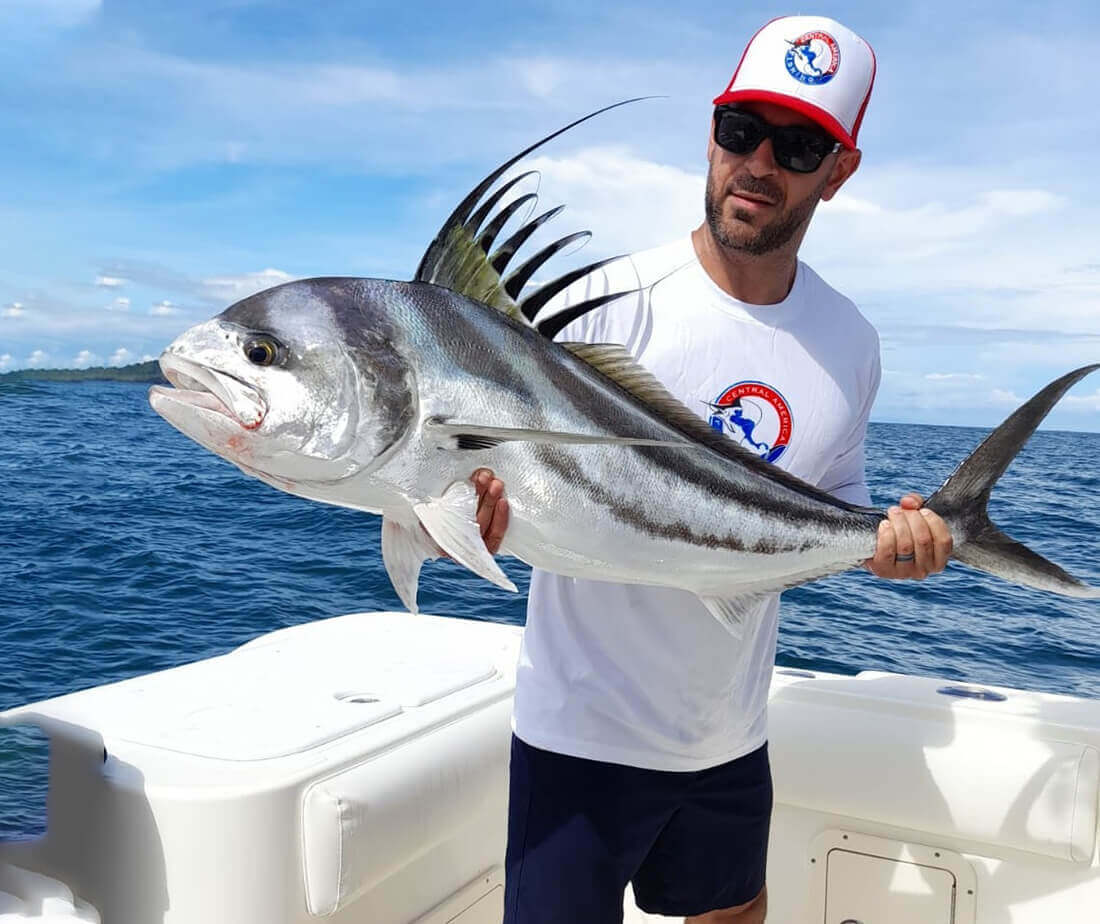
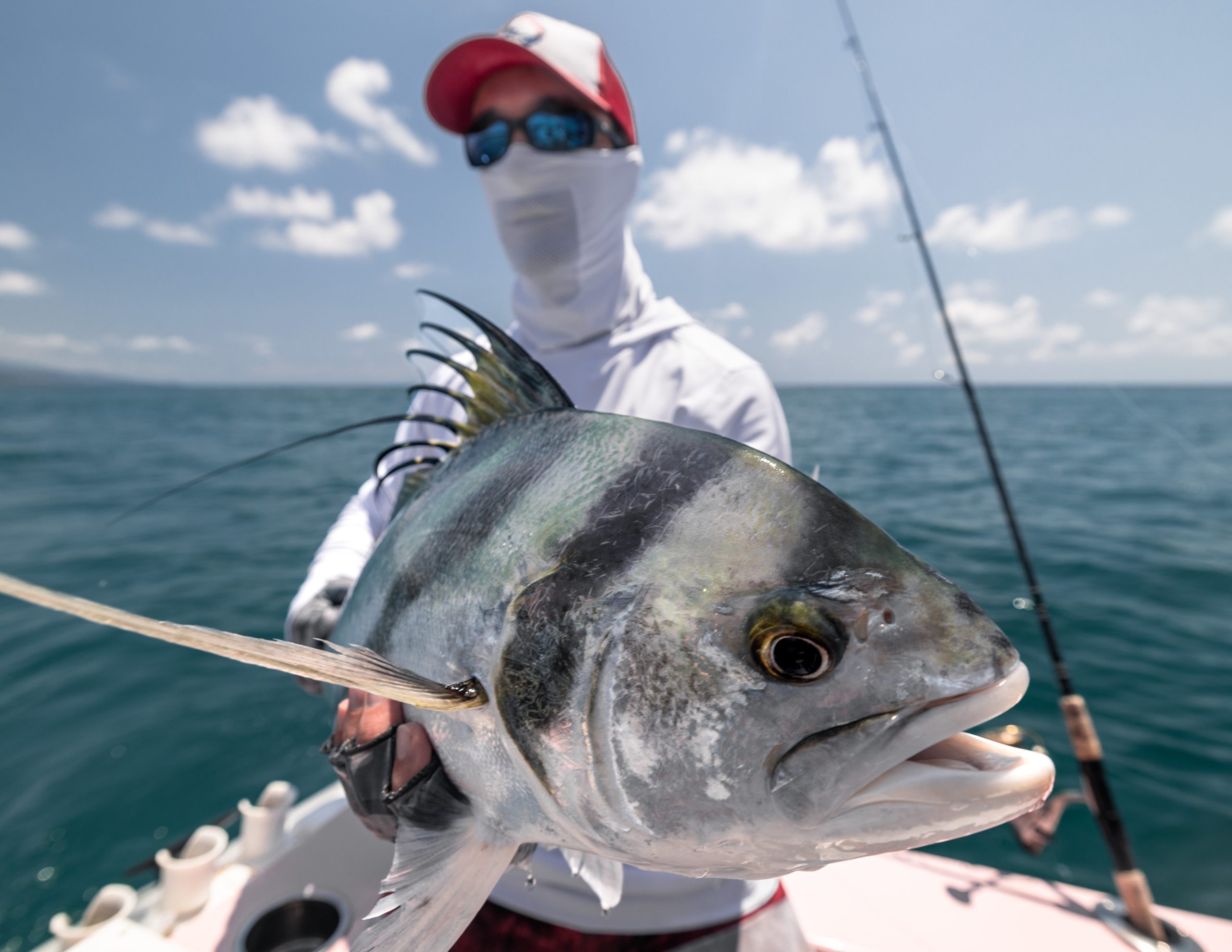
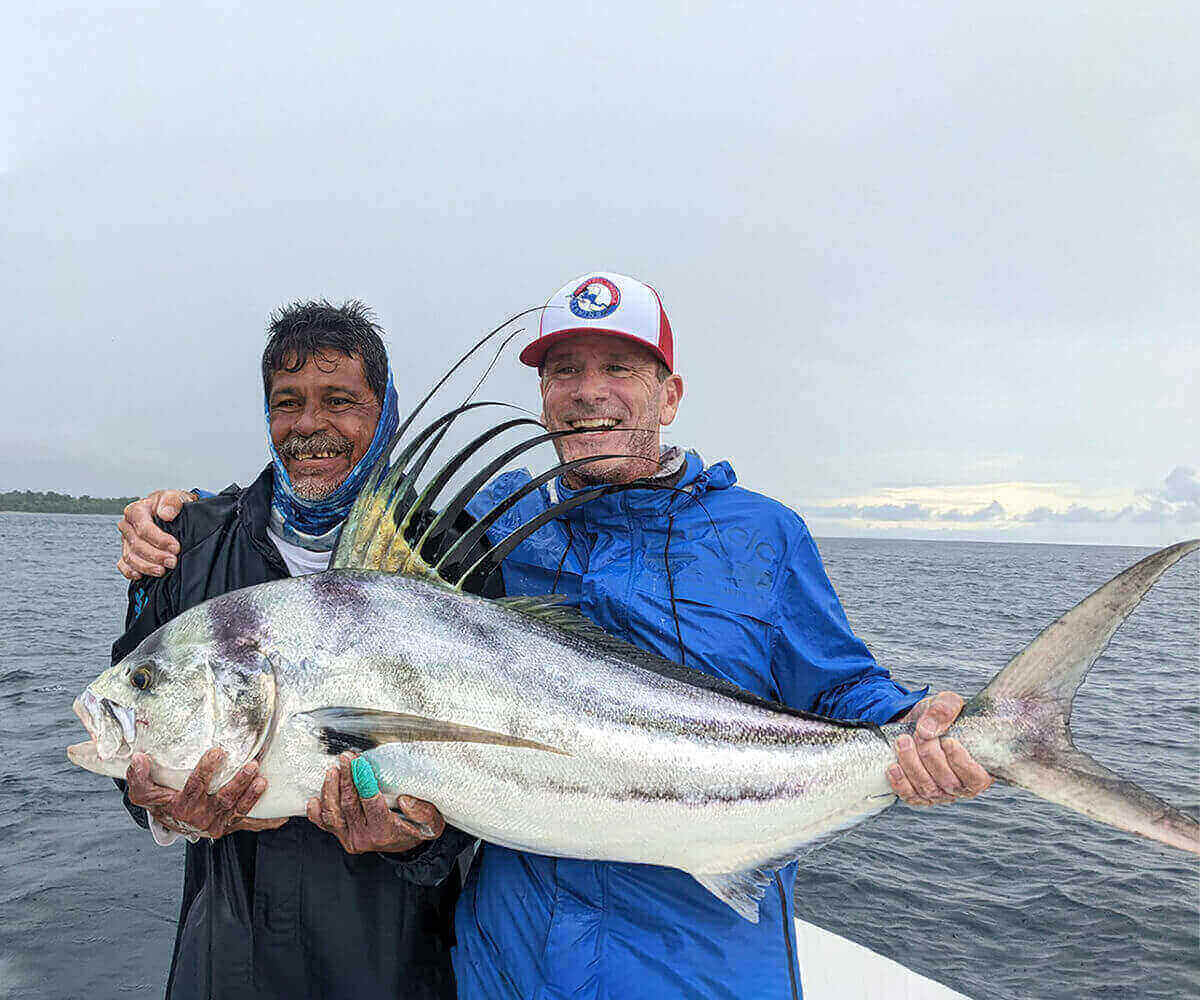
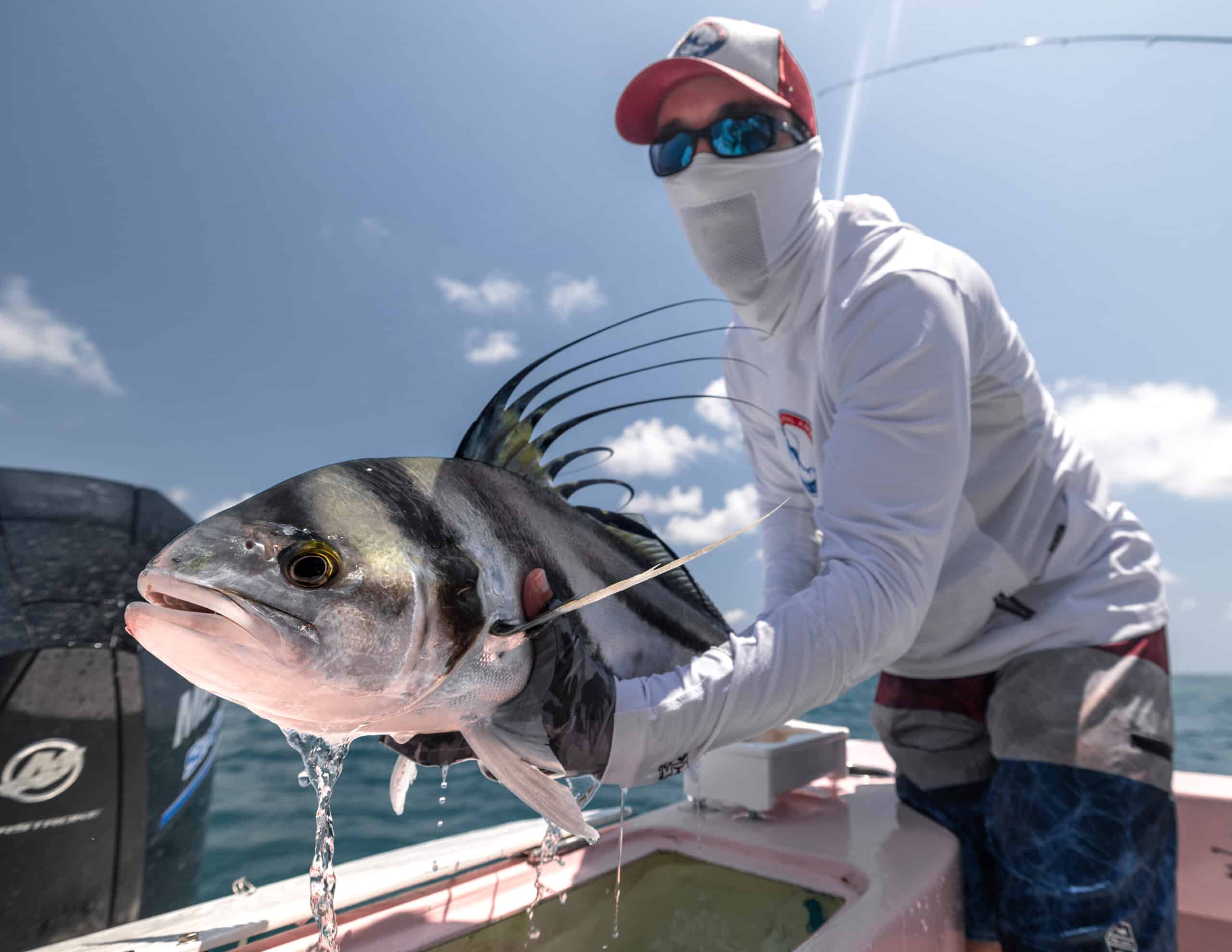
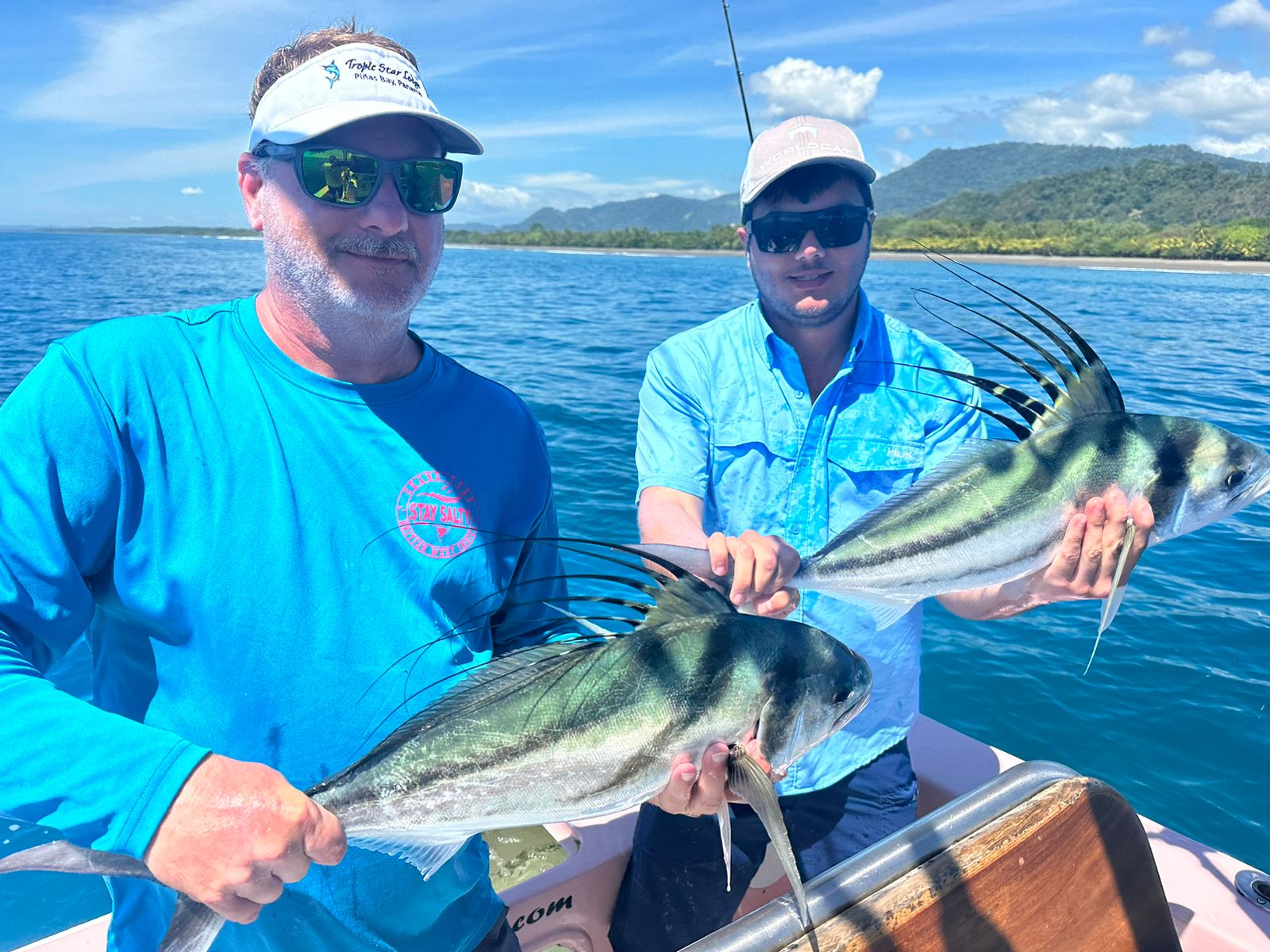
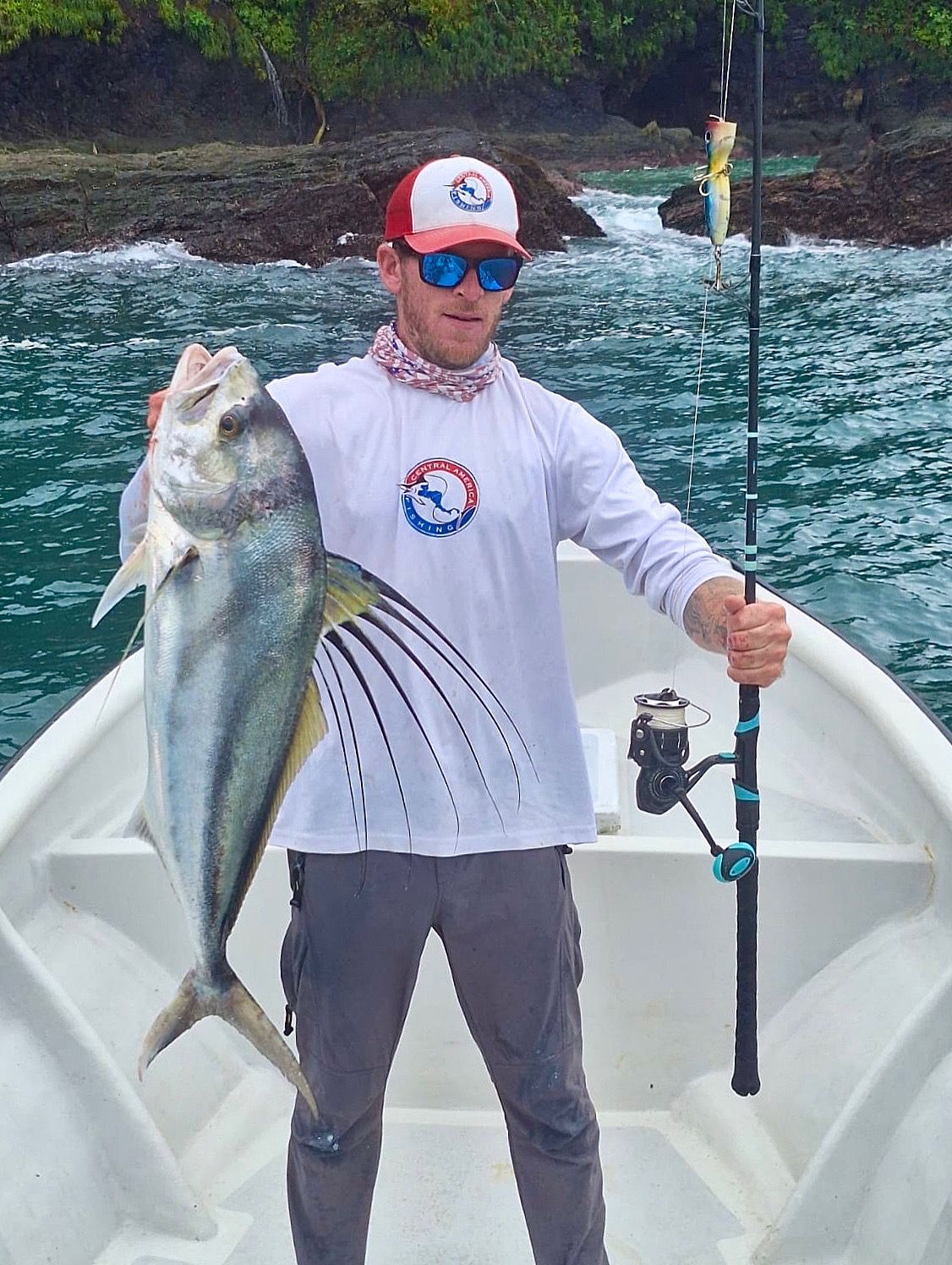
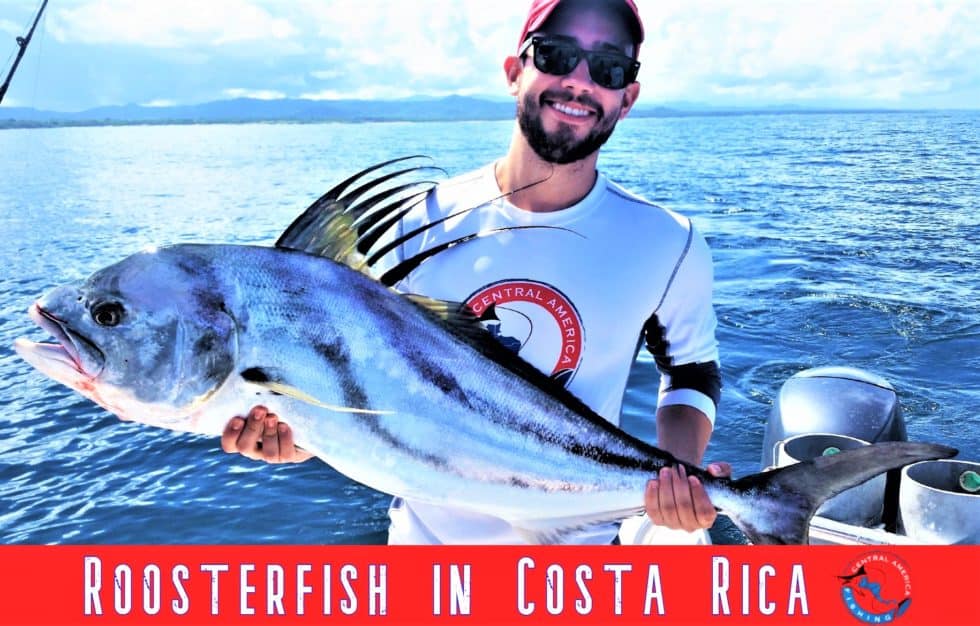
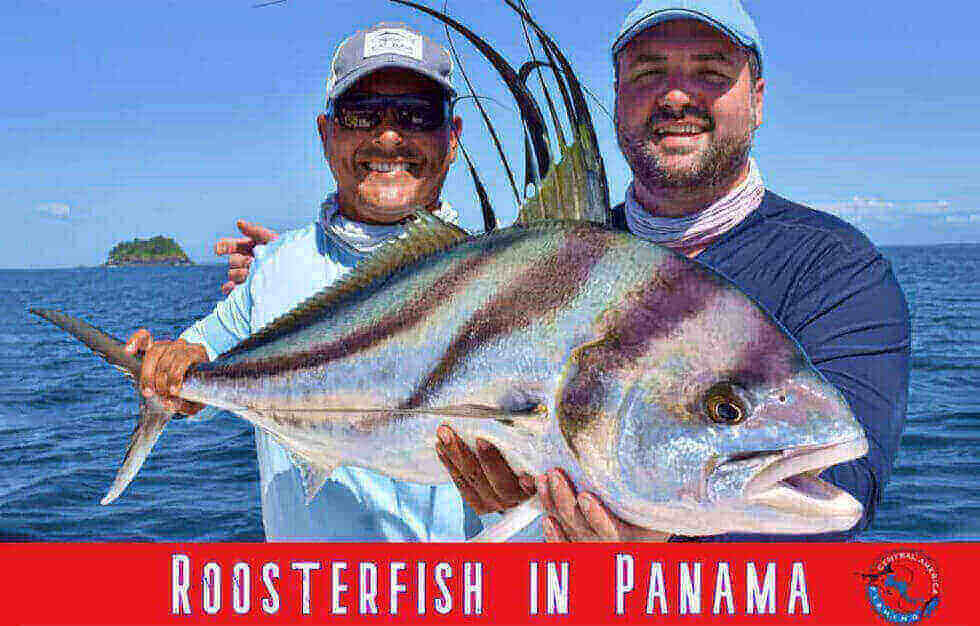
Roosterfish are one of the most sought after species in Central America, and one of the most prized inshore species in the world. The obvious defining characteristic of the roosterfish is their unique dorsal fin. Made up of seven spines, it resembles the comb of a rooster and is how they got their name in both languages (they are called ‘pez gallo’ in Spanish). The majority of the time the dorsal fin remains at rest in a deep groove along the top of the rooster’s back, but when excited it will raise it to appear larger and help herd bait fish they are after. Roosterfish feature four dark, wide stripes diagonally along their head and flanks. These bands range in color from dark blue to purple to black, which add to it’s beauty in pictures. Roosterfish are also very unique in that their swim bladder makes contact with their inner ear, which enhances their ability to hear. They are the only known fish to have this feature.
| SCIENTIFIC NAME | Nematistius pectoralis |
| COMMON NAMES | Roosterfish, Rooster, Pez Gallo, Gallo |
| RANGE | In warm, shallow waters of the Eastern Pacific from Southern California to Peru |
| HABITAT | Often found near rocky islands and rock piles. Can also be round patrolling the surf line over sandy bottoms. |
| COMMON PREY | Sardines, Anchovies, Blue Runners, Look Downs, Goggle Eyes |
| AVERAGE SIZE | The majority of fish caught are between 15-30 lbs. A trophy roosterfish is considered anything over 50 lbs. |
| IGFA ALL-TACKLE WORLD RECORD | 114 lbs, 0 oz – La Paz, Mexico – 1960 |
| PROTECTION STATUS | Roosterfish are not protected by law like billfish, but nearly 100% of captains practice catch-and-release. |
| TABLEFARE QUALITY | Roosterfish meat is dark red and generally not considered a desireable fish to eat. Locals eat them occassionally, but it’s not a main part of their diet |
What Do Roosterfish Eat?
Roosterfish are an aggressive and predatory inshore species. They primarily feed on other small fish like sardines, anchovies, lookdowns, goggle eyes, and blue runners. They also love green jacks, which are more common when the rainy season starts in May/June. We’ve also seen them chase needle fish at the surface and swallow a live bonito, so essentially anything smaller than them is on the menu. Most local captains agree that lookdowns are their favorite meal and are the preferred live bait.
How Big are Roosterfish in Central America?
Most roosterfish in Central America are in the 15-30 lb range. A big rooster is considered 40 lbs or bigger, with a trophy rooster being anything over 50 lbs. Smaller roosterfish in the 5-15 lb range are often caught in big “wolf packs” as they swim and feed together for safety.
How to Catch Roosterfish
Roosterfish can be caught in a variety of different ways, which gives anglers options based on their preferred method and the conditions. While nearly every captain agrees that slow trolling live bait is the most effective way to catch roosterfish, they can also be caught on artificials and even on the fly. Few things are more exciting than seeing a rooster’s comb moving erratically behind your popper as it begins to hunt. Roosterfish can also be caught on fly tackle, though saltwater fly anglers agree that landing roosterfish are one of the most challenging species to land on the fly. Roosterfish are not migratory, typically they travel less than 300 miles in their lifetime, so good catch-and-release practices will ensure their survival and a long-lasting bite for years to come.
Different Ways to Catch Roosterfish
Live Bait
Any captain here will tell you that the best way to catch roosterfish in Central America is with live bait. The tried-and-true method is slow trolling live bait like blue runners and their favorite – lookdowns – around rock piles and islands. When aiming for trophy roosterfish, small bonito slow trolled around the rocky islands and deepers reefs they patrol can elicit bites from the 50+ pounders.
Topwater Lures
For many anglers, catching a roosterfish on a topwater lure is a dream come true. Seeing their iconic comb-like dorsal fin appear behind your popper and their erratic behavior will get anyone’s heart pumping. Some of our favorite lures for catching roosterfish are Yo Zuri bull popper, Halco Roosta poppers, and Chug Norris poppers. Color patterns that mimic their natural prey of flying fish, blue runners, sardines, and bonito are good ideas. The popular spook lures can also tempt a rooster to leave the rocks and hit at the surface. One of our personal favorites is the ranger lure. Due to its erratic surface action and how it skips from wave to wave, on the right day we’ve seen it drive roosters absolutely berserk.
Swimbaits
If you don’t have live bait and the roosterfish aren’t hitting the surface lures, the next best option is to start working swimbaits. While everyone dreams of catching a rooster on a surface lure, there are days when it simply isn’t going to happen, so having a swimbait that can work a little deeper in the water column can make all the difference of you going home empty handed or with a huge smile on your face. Roosterfish are known to patrol their home reefs and rockpiles, so something like a Yo Zuri crystal minnow or hydro minnow can be the perfect lure on the right day. Blacks, blues, silvers, and Central America classic of white with a red head are always favorites.
Jigging
While most anglers don’t think of roosterfish as a species you jig for, we’ve seen too many caught on jigs in our twenty years in Central America to rule this out. To be fair, a lot of the roosterfish caught on jigs were wonderful surprises as opposed to a dialed in attack, but it can be the winning formula on slow days. Roosterfish are notorious for not liking green water, so sometimes during our rainy season the top of the water column will have green water sitting on top, but 30-50 ft down it may be clear blue water. In these conditions, the roosterfish may be patrolling right at the thermal cline and hunting more on vibrations versus sight. If you can work a well-placed jig in front of a hungry roosterfish, hold on tight.
Fly Fishing
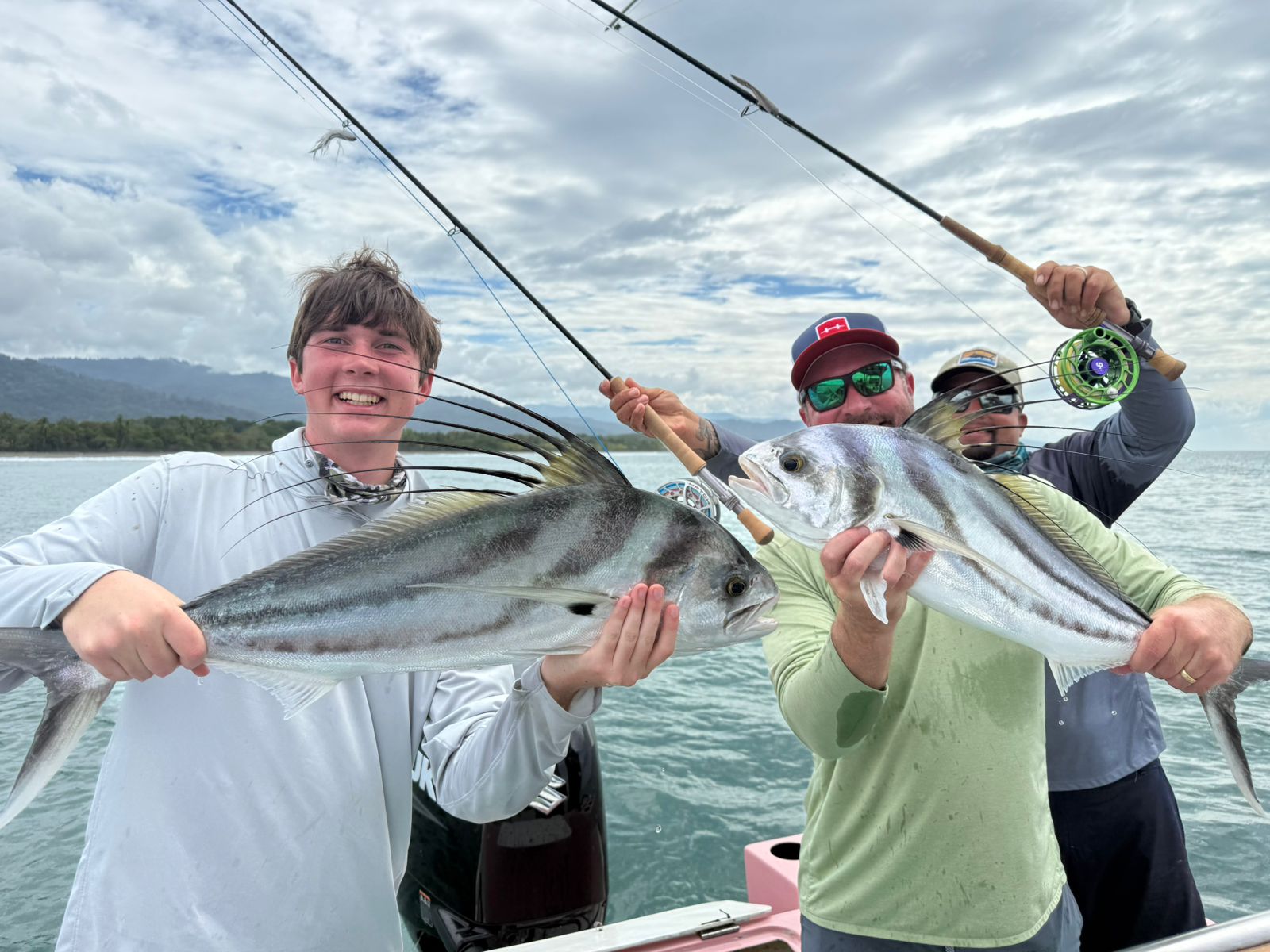
Without a doubt, roosterfish are one of the hardest fish to catch on a fly rod – but that doesn’t stop anglers from trying! This is one of the most challenging and frustrating fish to catch because you are often blind casting to them from a moving boat. Another technique is to have one angler work a popper to try and lure them up to the surface, then the fly angler casts his fly to that same spot as a sort of “bait & switch” tactic. You will almost never be able to cast to the same fish twice, so it’s really about having the stars align when they need to. Poppers and streamers can elicit bites.
Recommended Roosterfish Tackle
Conventional & Spinning Tackle
Roosterfish can be caught just as easily on conventional as on spinning tackle. It’s most common to use bait casters and lighter 15-20 lb class conventional tackle when trolling live bait for roosterfish behind the boat, but spinning reels work well in this application too. When casting swimbaits and poppers, spinning reels are the best fit. Spinning reels in the 5000-8000 class are ideal to give you enough line to not get spooled and enough drag to tire the fish out. Light tackle inshore rods and reels spooled with 30-50 lb braid are ideal.
Fly Fishing
For most roosters, an 8 wt or 9 wt rod with a large arbor reel is needed. If you are specifically targeting larger fish, a 9-10 wt rod will be fine as you don’t want to be undergunned during the fish of a lifetime. If you are casting streamers, an intermediate sinking line is preferred. For poppers, a floating line is best. You will want a 30-40 lb mono leader.
Fish the Tides
Catching a roosterfish is often very tidal-dependent, so knowing the tides when fishing for roosterfish is key. Like many inshore species, roosterfish will be most active feeding on rising and falling tides. Fishing a full 8-9 hour day can sometimes come down to a flurry of action that lasts 30-60 minutes, so make sure you are in the right spot at the right time!
Fighting Your Fish
When hooked, roosterfish usually don’t take to the air but prefer long, powerful runs. Often times when you think you have this inshore bruiser beat, it will see the boat for the first time and take off on another scorching run, peeling off all that hard-fought line you just gained. Juvenile roosterfish will jump and flip when hooked, but it’s rare that the larger, mature fish leave the water.
Releasing Your Fish
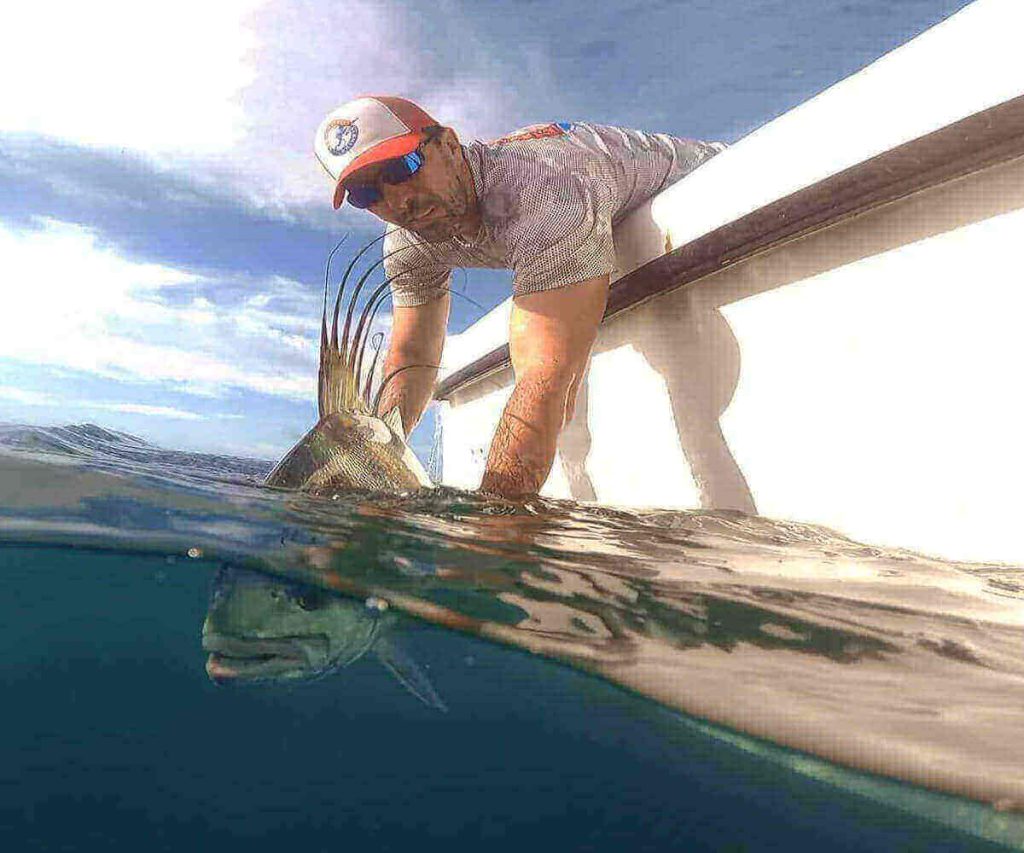
Like any fish, you need to be very careful not to touch the gills when holding your roosterfish for a picture. They aren’t as hardy as some other fish out of the water, like cubera snapper, so try to get your picture as quickly as possible. If needed, dunk the roosterfish in the live well to let it breath and to keep it wet. When you release it, try to gently hold its tail and support it’s body by the boat until it has the strength to swim out of your hand.
Where is the Best Place to Catch Roosterfish?
Roosterfish are unique in that they are only found in the warm Eastern Pacific waters. Their range is from southern California to Peru, but their numbers are most prevalent here in Central America. Roosterfish are caught behind the surf over sandy bottoms, but they really seem to love rocky islands and reefs the most. Central America’s volcanic, rocky coastline provides the perfect habitat for this prized inshore trophy. They can also be caught near river mouths if bait is present, though they are not typically seen in brackish water like snook or snapper.
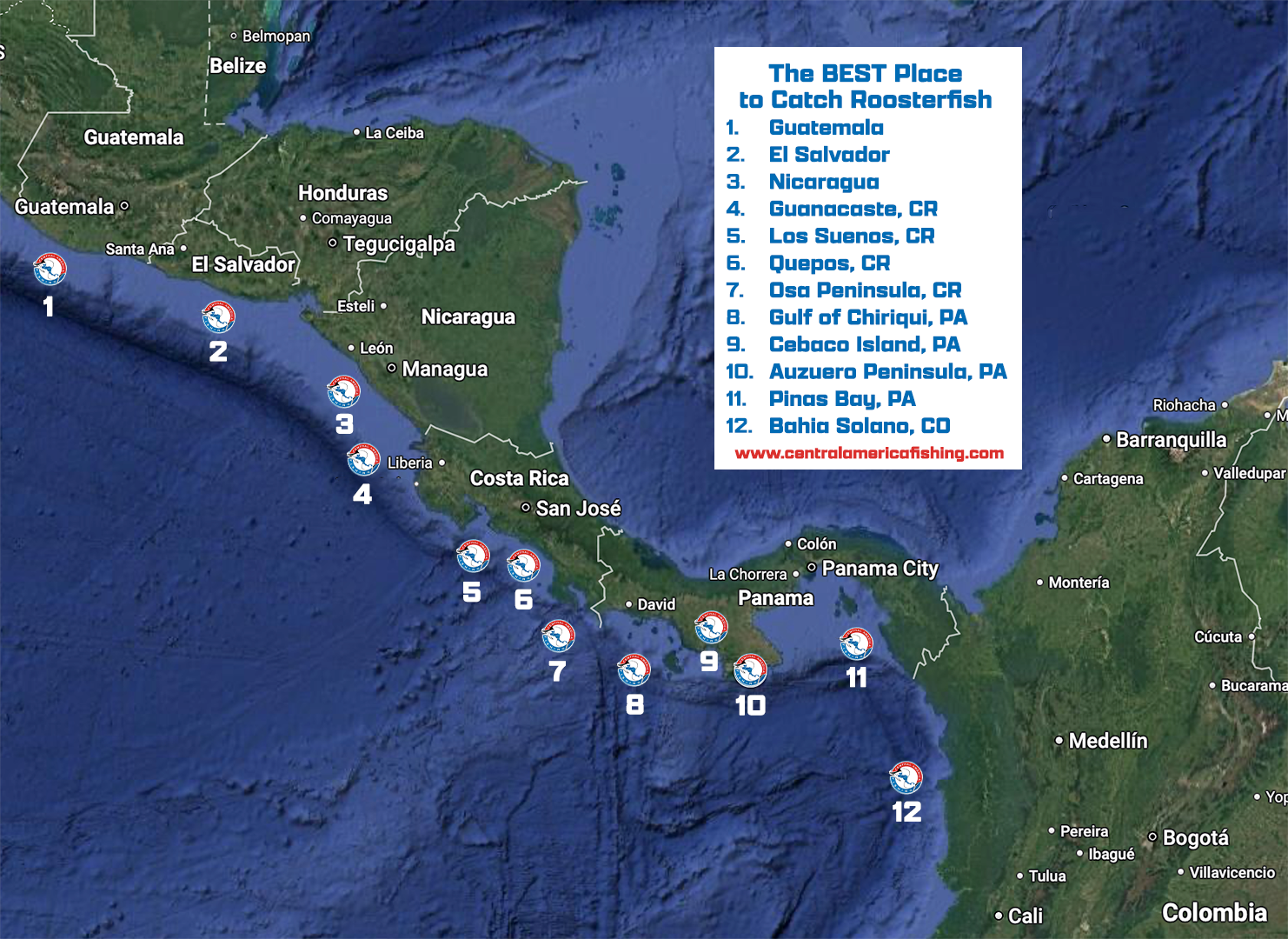
Without any doubt, the two the best countries in the world to catch roosterfish are Costa Rica and Panama thanks to the combination of rocky islands and reefs, river mouths, and plentiful baitfish. While our boats in Guatemala, El Salvador, and Nicaragua do catch roosterfish, their numbers are not as consistently productive as Costa Rica or Panama and the captains not as experienced as our dedicated inshore guides in each country. Colombia is gaining a reputation as a great place to target big roosterfish as well, but the accommodation and charter options are more limited there. Our map below shows the best places to catch roosterfish in Central America from north to south.
When is the Best Time to Catch Roosterfish?
The best months to catch roosterfish in Central America are December through July, but we do catch them twelve months a year. Unlike pelagic species that are migratory and more seasonal, we catch roosterfish year round, but the conditions are better during specific months at each destination. The time of year you visit will determine where you should go for the best chance at catching a roosterfish. Our table below lists our top destinations for roosterfish and when to target them:
| DESTINATION | PEAK ROOSTERFISH MONTHS | SLOWEST FISHING MONTHS |
| Quepos, Costa Rica | December through April due to dry season weather and plentiful baitfish. Quepos hosts a roosterfish tournament every Feb. | September through early November due to the peak of the rainy season. Coastal waters are cooler, dirtier and have more freshwater. |
| Osa Peninsula, Costa Rica | January through May with the dry season weather and plentiful baitfish. The dry season starts a month later in the Southern Zone versus the Central Pacific. | September through early December. The Osa Peninsula receives the most amount of rain along Costa Rica’s Pacific Coast during these months. |
| Gulf of Chiriqui, Panama | December through July with the dry season. Smaller roosters available near the beach and in bays in the dry season. Larger roosters found around the islands and offshore rock piles. Big roosters in the green season months of May-July. | August to November due to the rainy season. Rivers make the coastal waters turn green with freshwater or brown with runoff, which roosterfish don’t like. |
| Azuero Peninsula, Panama | January & February, May to July. January and February are the start of the dry season, so baitfish are plentiful and coastal waters are clear. From May to July, the afternoon rains wash out the bait hiding in the rivers like prawns, sardines, and green jacks. | September to November due to the peak of the rainy season. The majority of the boats in this region are pangas that launch from the beach, and conditions are rougher this time of year. |
| Guanacaste, Costa Rica | April to September. The best fishing and weather in Guanacaste is opposite of Central & Southern Costa Rica. Nice weather and sea conditions, plus baitfish, make the green season the best time to fish in Guanacaste. | October to January. The months of Oct & Nov are the peak of the rainy season, and both weather and ocean conditions are sub-prime. From Dec to Feb, Guanacaste gets hit hard by strong seasonal winds and that can make conditions challenging. |
| Los Sueños, Costa Rica | December through April due to dry season weather and plentiful baifish. Many captains in the marina do more offshore than inshore fishing, so it’s important to find guiedes that fish inshore every day. | August to early November due to the peak of the rainy season. |
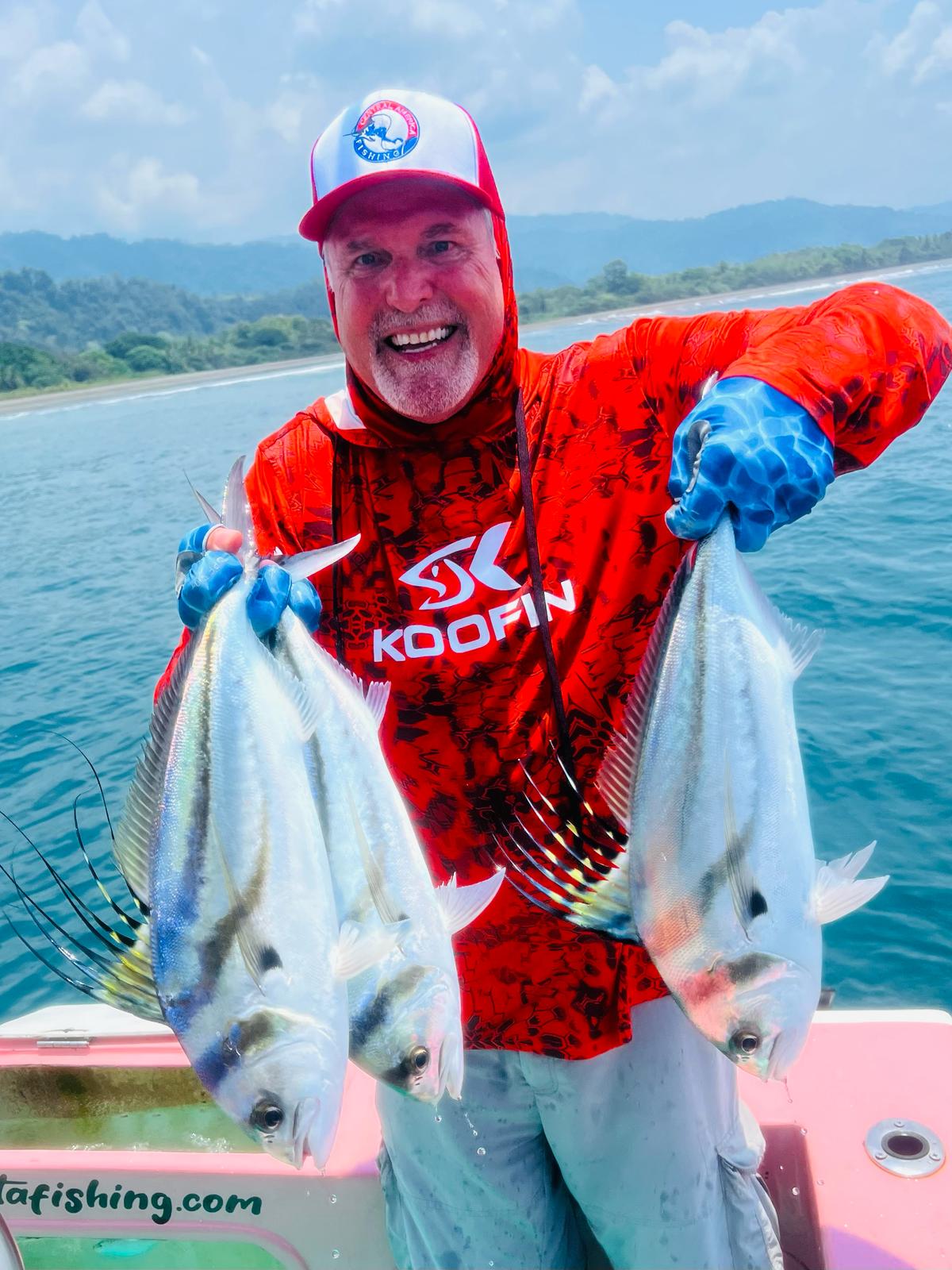
The dry season along the Pacific Coast of Central America is December through April, and that offers the best roosterfish conditions. The coastal water is clear blue, calm and there are plenty of baitfish. As the sardines and anchovies return, the juvenile roosters travel in wolf packs and can be caught by the dozen near the surf line on sandy beaches. It’s not uncommon to catch 10-20 roosterfish in a day in December and January, but many of those fish will be under twenty pounds. The all-time CAF record was set by the Johnson family who caught 34 roosterfish in one day in January 2024 fishing in Quepos, Costa Rica.
As we move into February though April, the overall numbers may drop a bit, but we start to see bigger, mature fish. The roosterfish bite is so good that that Marina Pez Vela in Quepos, Costa Rica hosts an annual roosterfish tournament every February called the Rooster Rodeo. Big trophy roosters over 50 lbs can be caught any time of year, but that seems to happen more from Feb to July. Once the rainy season starts in May, the green jack numbers increase, especially around river mouths, and roosterfish are close behind to devour them. During these months it’s more common to catch a lone wolf or a pair of roosters, which tend to be mature adult fish.
The months of September and October can be much slower for roosterfish because that is the peak of the rainy season in Central America, but they are still available. During this time of year, the rivers are dumping out tons of freshwater so the coastal waters turn green and are much cooler, which usually drives most of the roosterfish away. My personal best roosterfish was caught in September however, and one of the biggest roosterfish caught at Crocodile Bay was in October.
Are Roosterfish Edible?
Roosterfish are not protected by law, so they are technically an edible fish. That said, they are one of the most prized gamefish we have in Central America, so the vast majority of them are released so they can grow and be caught again. Those conservation efforts are certainly aided by the fact that roosterfish have a dark, red meat so they don’t taste very good to begin with. Typically, the only roosterfish that are harvested are the ones who died in the fight, otherwise we go to great lengths to revive them and release them.
How Many Roosterfish Can I Expect to Catch?
As with any type of fishing, there is never a guarantee you’ll catch a roosterfish, so any day you catch one is considered a successful day. Unfortunately, there are days and even weeks when we simply can not find them. There are other weeks where every boat in the fleet catches multiple roosterfish each day. The complex formula of the presence of baitfish, water quality and temperature, currents, and tides is ever changing. If you are in the right location during the right time of year, your odds of catching a roosterfish can be 50% or better.
The CAF record is 34 roosterfish in one day, set by the Johnson family in January 2024. They accomplished this with our top inshore guide in Quepos, Costa Rica.
CAF’s marketing manager, Dakota, used to be a fishing guide in Panama before joining our team. His record in the Azuero Peninsula is 22 roosterfish in a day.
What is the World Record Roosterfish?
The all tackle world record is a 114 lb 0 oz monster caught back in 1960 in La Paz, Mexico. The all tackle world record for length was caught in Panama as recently as December 2019 with a 136.0 cm behemoth. Several different line class world records were also set in Costa Rica and Panama.
Planning Your Trip to Catch Roosterfish
A vacation to catch roosterfish can take on several different forms, and we can help with all of it. For some, the vacation and R&R is the priority, and sneaking out to fish for a day is just something fun to try. For many, offshore fishing is the main draw, but anglers include a day of inshore fishing to catch roosterfish and other inshore species. For the feverish, the entire trip is focussed around light tackle inshore fishing and targetting roosterfish. The hard part is knowing not only where to go, but when to visit and who to fish with once you are there.
Central America Fishing has been the leading sport fishing outfitter for 20 yrs and has put thousands of clients on roosterfish over the years. Call us at 855-414-3474 to discuss the seasons and destinations, or browse our sample Costa Rica and Panama fishing packages below. We will build you a fully customized itinerary from start to finish that includes in-country transfers, accommodations, and private fishing charters.
Roosterfish FAQs
When is the Best Time to Catch Roosterfish?
The best time to catch roosterfish along Central America’s Pacific Coast is December through May.
Where is the Best Place to Catch Roosterfish?
Roosterfish range from as far north as Baja California to as far south as Colombia, but are most prevalent in Central America. The countries with the most consistent roosterfish population are Costa Rica and Panama.
Are Roosterfish Edible?
Roosterfish are a strictly catch-and-release species even though they are not protected by law. Their dark red meat does not taste good, and they are such a prized inshore species that all captains prefer to release them so the population remains healthy.
How Big are Roosterfish?
The vast majority of the roosterfish caught in Central America are between 10-30 lbs. Anything over 50 lbs is considered a trophy.
What is the Best Way to Catch Roosterfish?
Roosterfish can be caught on topwater lures, swim baits, jigs, and fly fishing, but the best way to catch roosterfish is to troll live bait. The best bait for roosterfish are lookdowns, blue runners, and green jacks.